
If you are a historical traveler, Sri Lanka is one of the best destination for you. Sri Lanka has many amazing historical sites. Among them, Anuradhapura and Polonnaruwa are the main tourist attractions.
Favorite
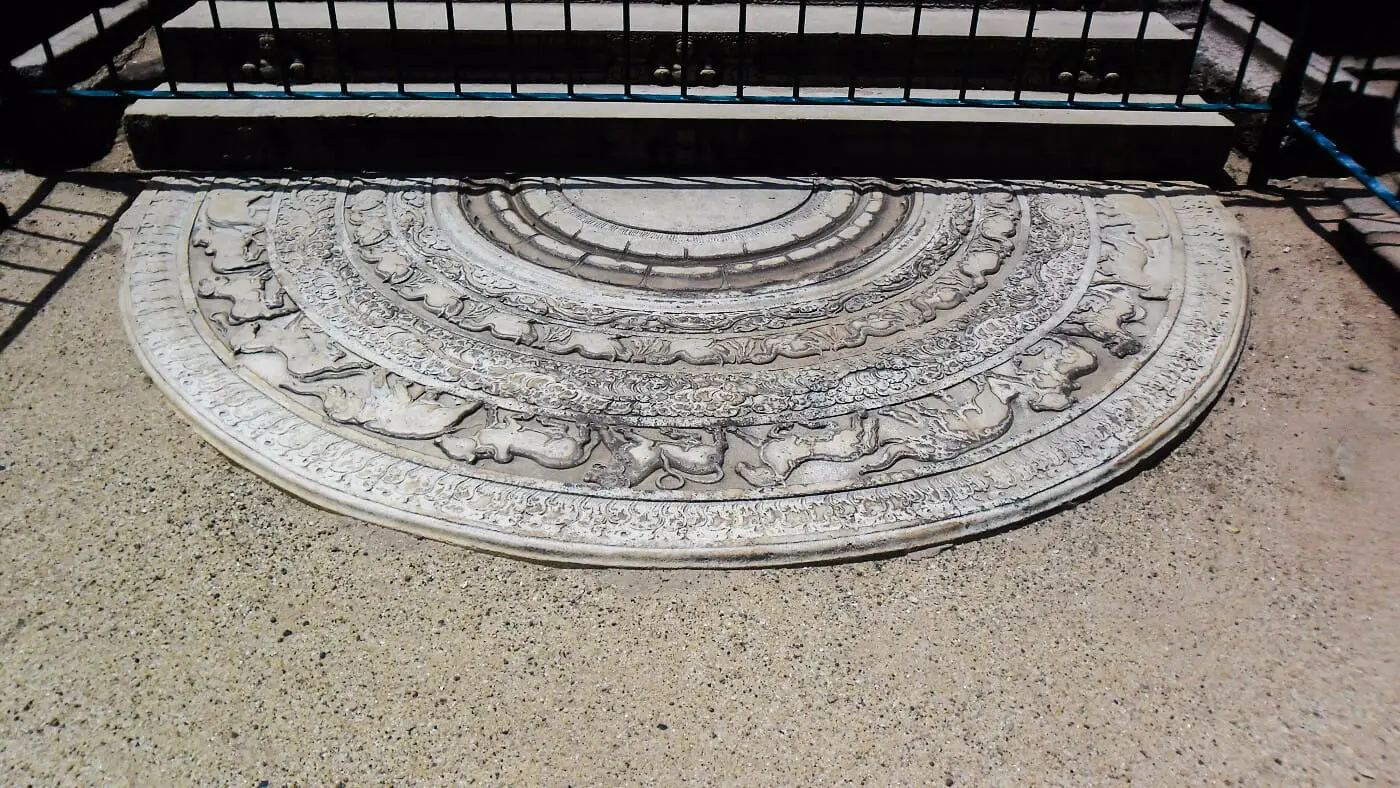
Sandakada Pahana (or Moonstone) is a semi-circular stone slab usually seen at the bottom of staircases of ancient religious places as well as some ancient royal palaces in Sri Lanka. It is a unique creation of ancient Sinhalese architecture. The Moonstone located in Mahasena’s Palace is the finest and best-preserved Moonstone found in Sri Lanka. This palace is located in the Sacred City of Anuradhapura in North Central Province, Sri Lanka. Sandakada Pahana (the Moonstone) at Mahasena’s Palace interpretation According to historians, the symbols and their arrangement represents a great religious meaning. The widely accepted interpretation was introduced by Prof. Senarath Read more...
Favorite
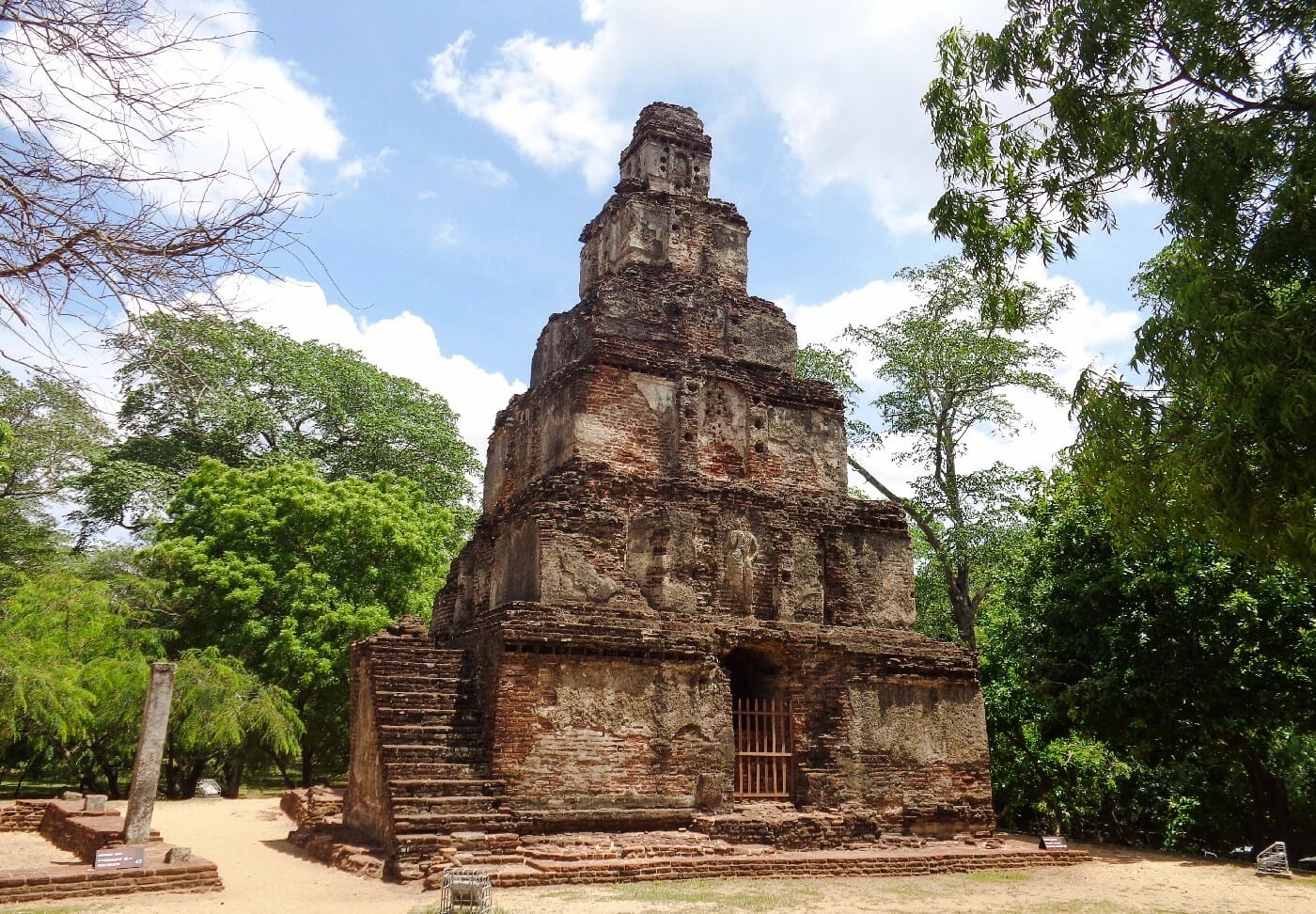
Sathmahal Prasadaya is a unique type of 7 storied ancient building in Dalada Maluwa premises in Polonnaruwa District of North Central Province, Sri Lanka. The Sinhala name “Sathmahal” has the meaning of 7 storied. The building is completely built with bricks and it takes the shape of a pyramid. The base of the building is the shape of a square with side length of 35 ft. There are four doors with arches on each side. Since these type of buildings have been found in Northern Thailand, this is also considered as a monument which confirms the foreign affairs in ancient Sri Lanka. Read more...
Favorite
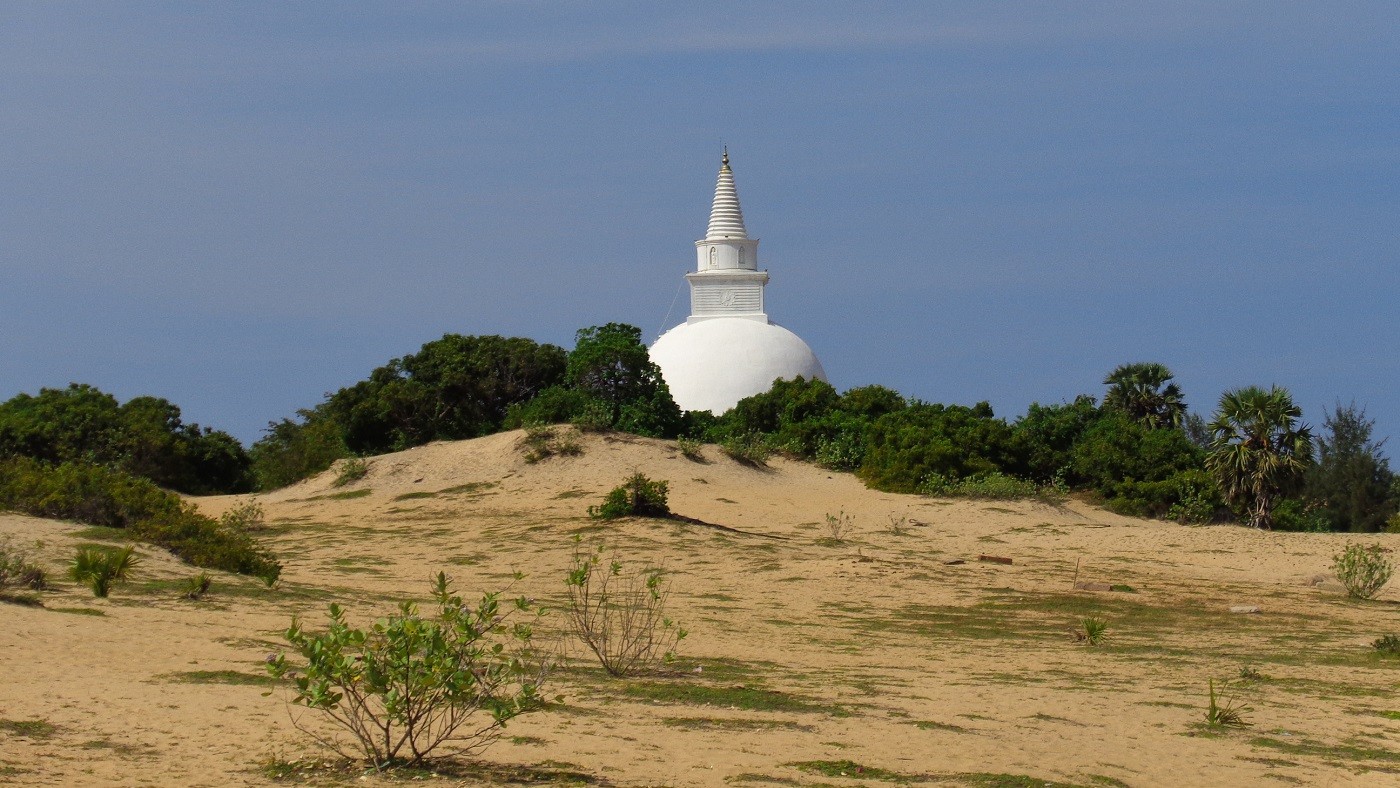
Muhudu Maha Viharaya is a Buddhist temple located in the Ampara District of Eastern Province, Sri Lanka. According to the historical evidence, the history of this temple goes back to the reign of King Kavantissa (205-161 B.C.). The temple is located on the Potuvil coast and it is believed to be the place where Viharamahadevi, the daughter of King Kelani Tissa was landed as said in the legend. External Links මුහුදු මහ විහාරයේ අද කතාව – Silumina Muhudu Maha Vihara – Department of Archaeology Three women in Sinhala history – The Island Read more...
Favorite
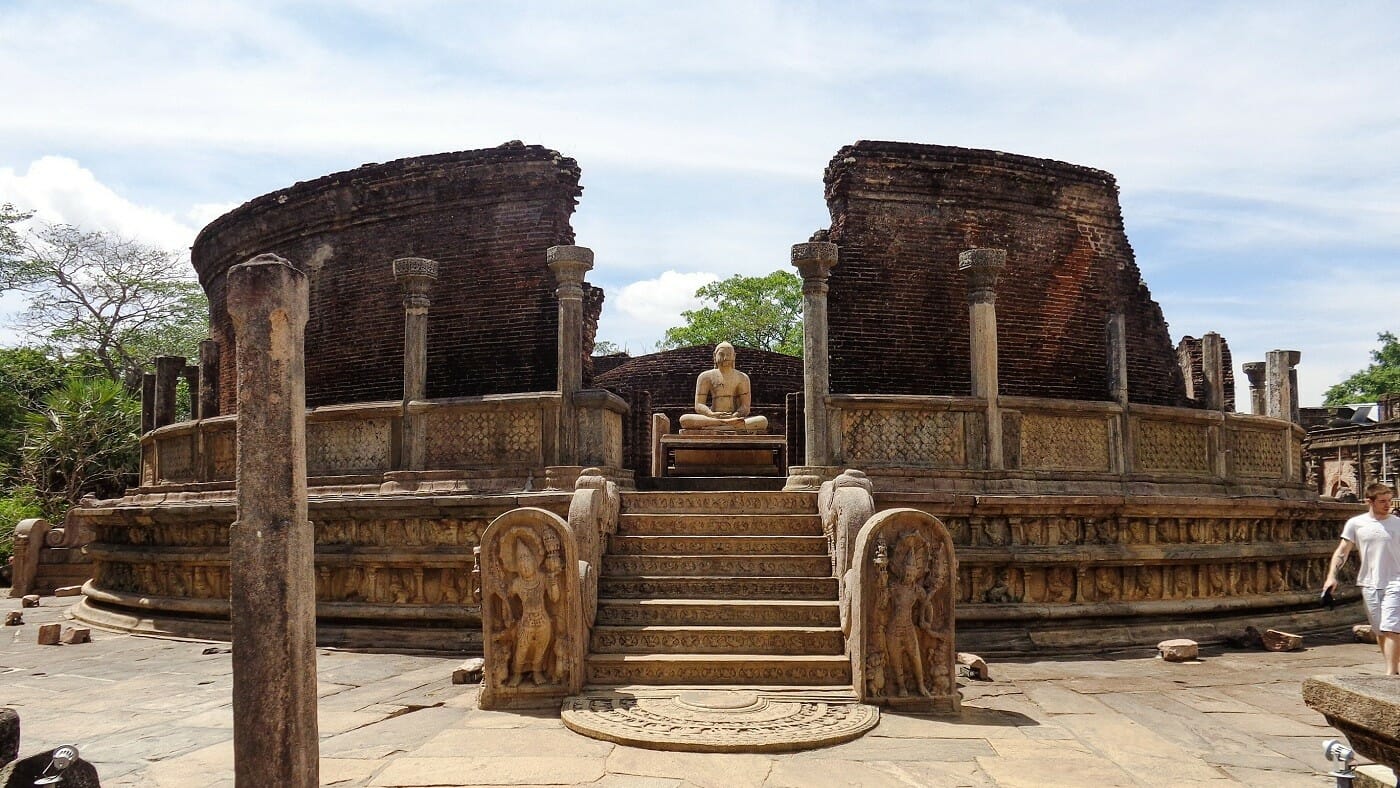
Polonnaruwa Vatadage belongs to the Polonnaruwa Kingdom. It is a structure which is built encircling the stupa for protection. It is believed that the structure was built during the reign of King Parakramabahu I (1123–1186) to hold the Sacred Tooth Relic of Lord Buddha. However, this has been renovated during the reign of King Nissanka Malla (1187 – 1196). One of the four Buddha statues on the upper platform This is the most famous Vatadage among the other Vatadage structures found in Sri Lanka. It has two stone platforms and only single entrance is there to access the lower platform. Read more...
Favorite
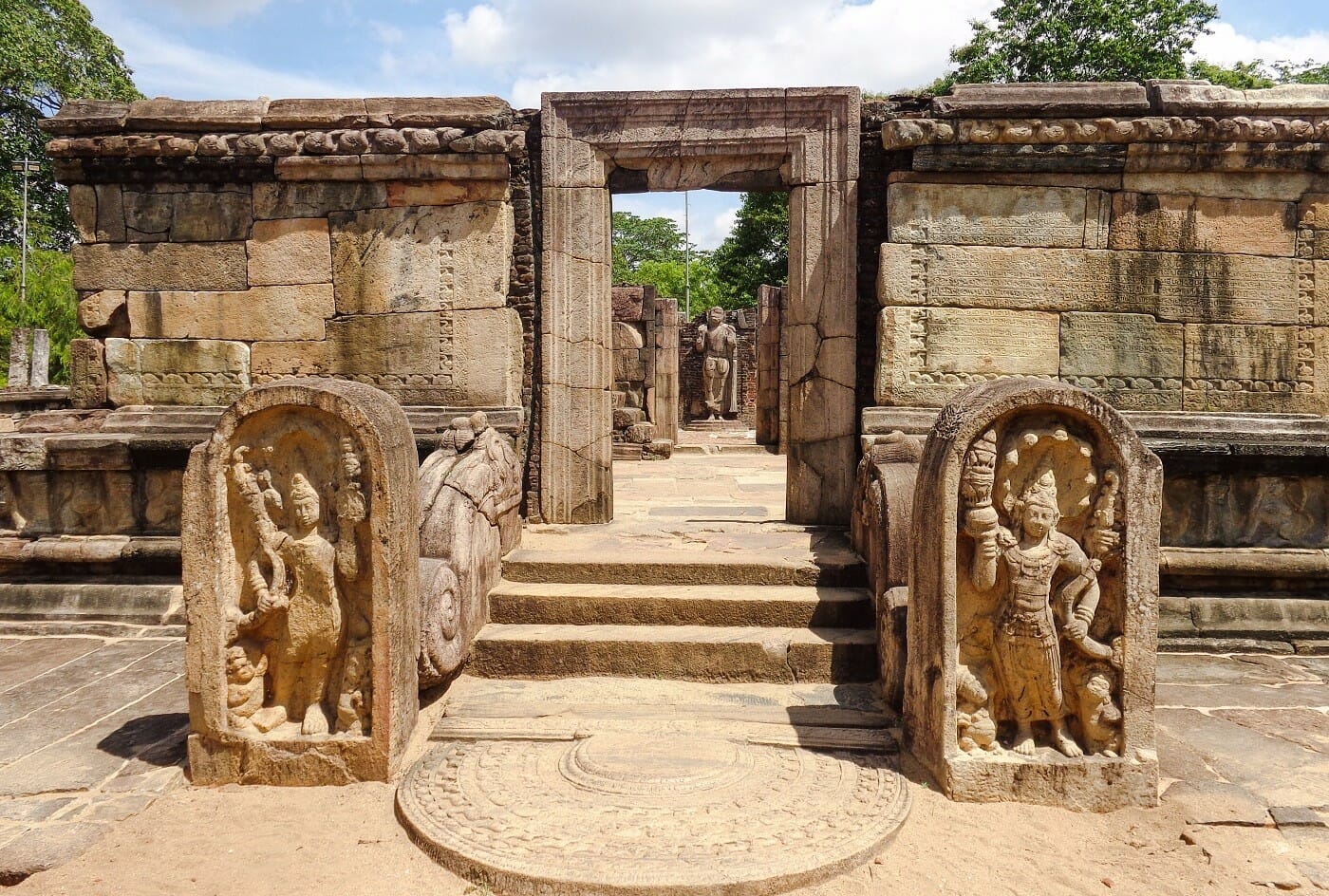
Hatadage is an ancient shrine in the Polonnaruwa District of North Central Province, Sri Lanka. It was built by the King Nissanka Malla (1187-1196 A.D.). This had been used to place the sacred tooth relic of Lord Buddha. According to historical sources, the shrine has built in sixty hours. The English translation of the Sinhalese word “Hata” is sixty, represent the duration of the construction period and the word “Dage” has the meaning of “relic shrine”. The remaining features of the building for today, evidence that the shrine was originally a two-story building. The shrine is 120 ft in length Read more...
Favorite
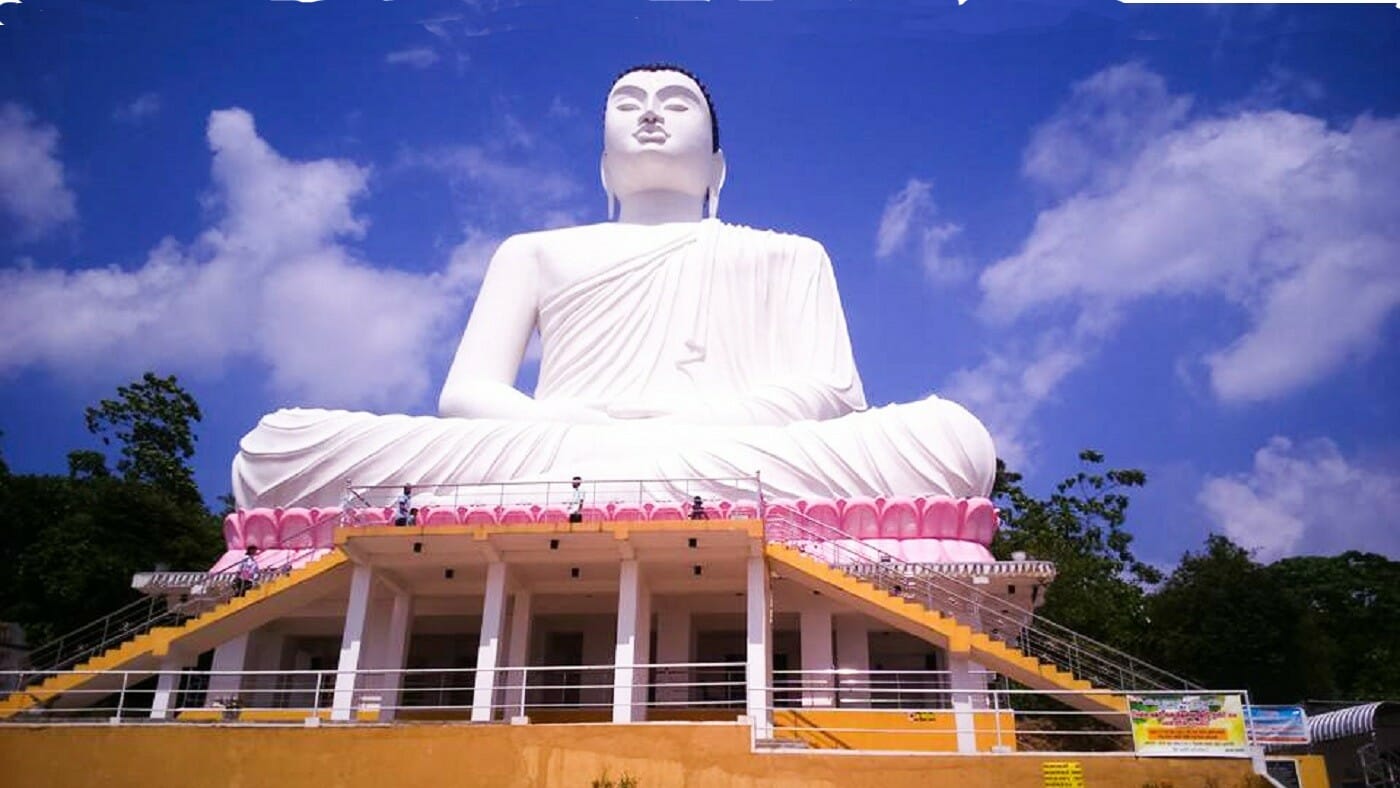
Korathota Raja Maha Viharaya is an ancient Buddhist temple located in Kaduwela, Colombo District of Sri Lanka. This temple, which dates back to 2000 years, is one of the few ancient temples found in the Western Province, sited on the top of a mountain next to the Belungala Rock in Kaduwela. This temple boasts of having the oldest and longest cave inscriptions in the Colombo district. Enter your current location in the search box below the map to find the best route to the Korathota Raja Maha Viharaya. Click here to find a list of accommodations around Kaduwela, Sri Lanka. Read more...
Favorite
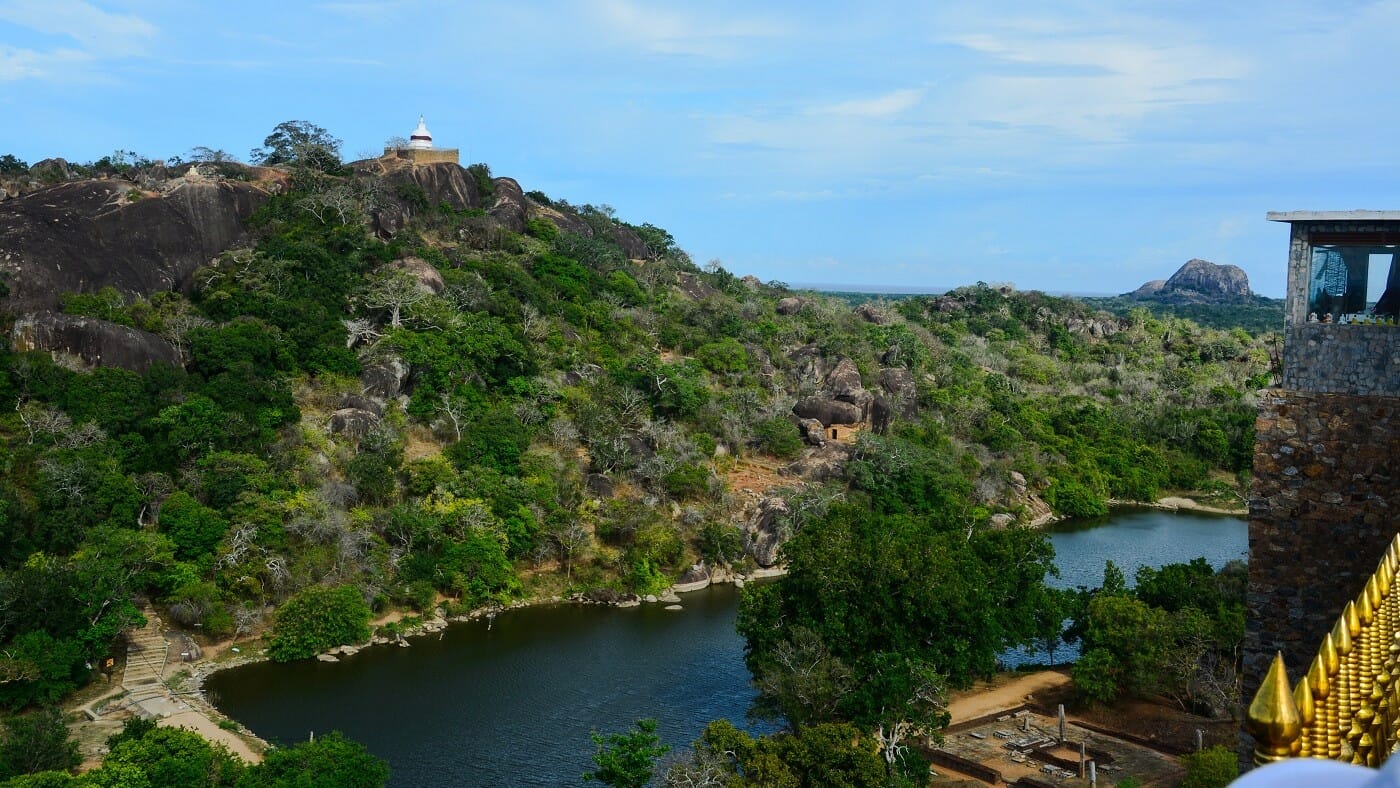
Sithulpawwa Rajamaha Viharaya is one of the greatest ancient Buddhist monasteries located in the Hambanthota District in the Southern Province of Sri Lanka. The history of the monastery dates back to 2nd century BC. It is believed that this place was built by King Kawanthissa ( 205–161 BC). According to Buddhist literature, this place was a center for Buddhist education for Buddhist monks, and once there had been 12,000 arhat monks around this location. Many caves, temples, images, houses, stupas, and ponds located around this large area bear witness to this story. Read more...
Favorite
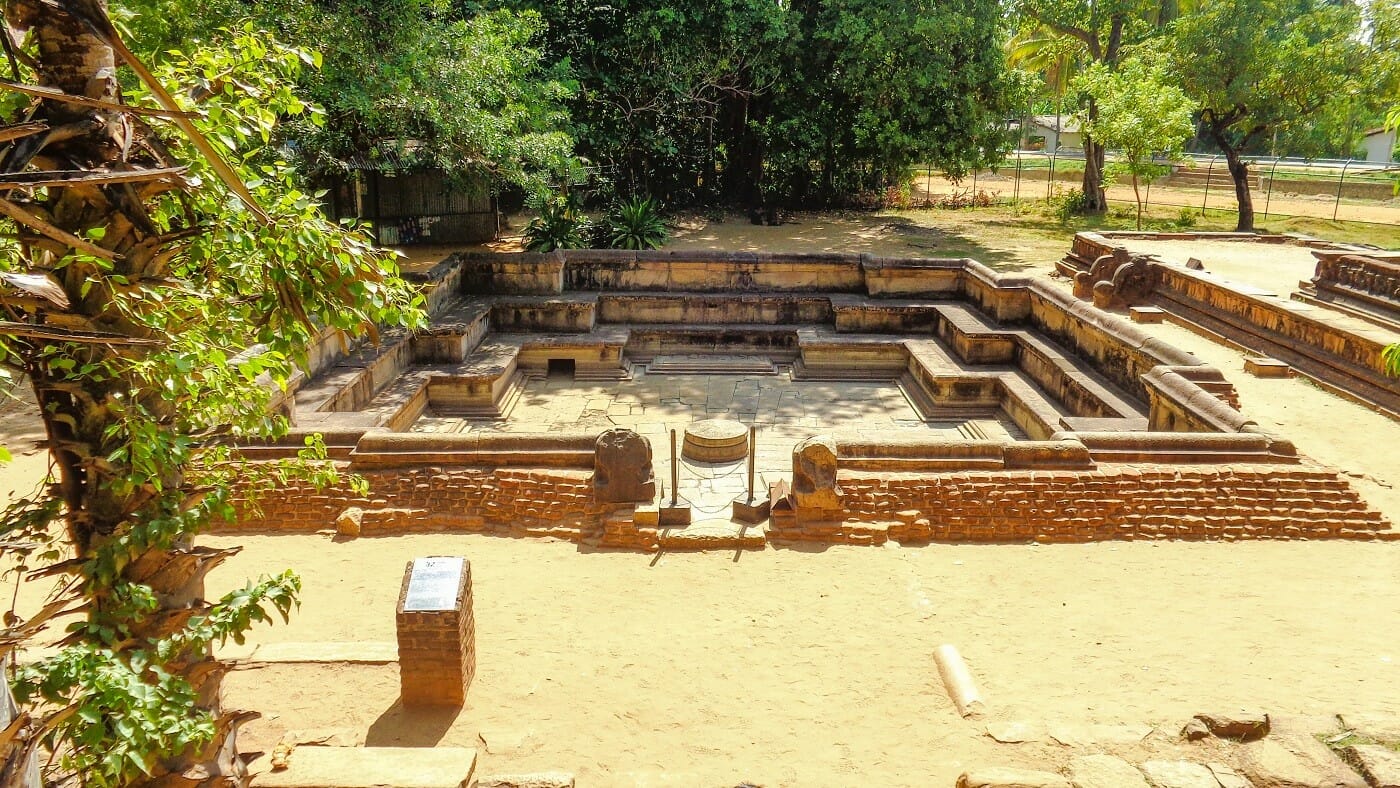
This pond or royal bath is presently known as “Kumara Pokuna” is believed to be the Pond named “Sila Pokkharani” mentioned Mahavamsa. The pond is located next to the Council Chamber of King Parakramabahu in Polonnaruwa District of North Central Province, Sri Lanka. According to Mahavamsa, the pond was built by King Parakramabahu the Great (1153 – 1186 A.D.). The pond is located such a way that it can get water from the Parakrama Samudraya tank and it has provided with outlets to drain off the used water. The water was supplied to the pond by the two dragon mouths located Read more...
Favorite
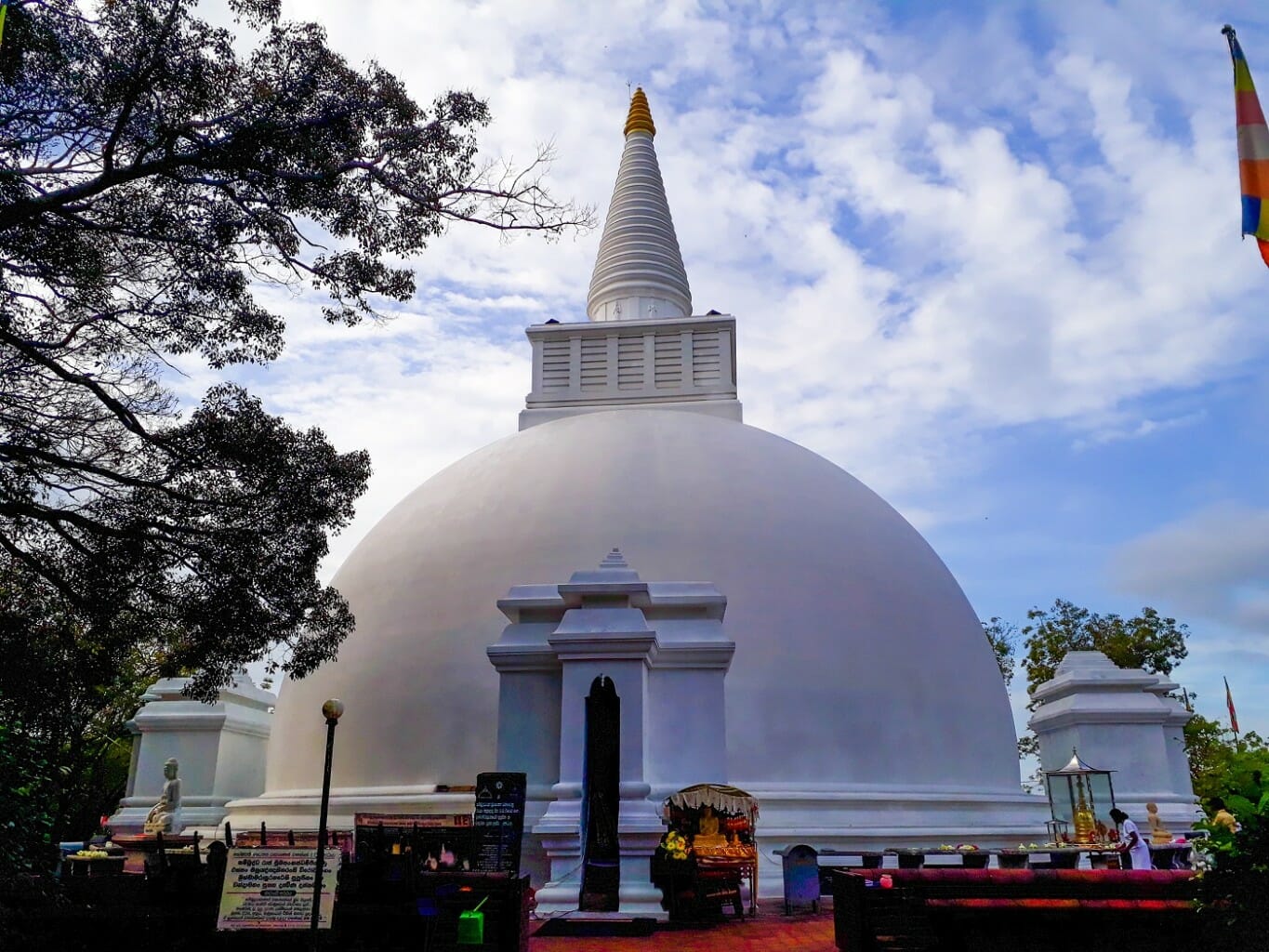
The Somawathiya Stupa is said to be enshrined the right tooth relic of Lord Buddha. It is located in Somawathiya Rajamaha Vihara premises in Polonnaruwa District of North Central Province. The area in which the temple located belongs to the Somawathiya National Park as well. The stupa was built during the reign of the King Kavanthissa (205–161 BC ) and it was named after his sister called princes Somawathi. Enter your current location in the search box below the map to find the best route to the Somawathiya Stupa. Click here to find a list of accommodations around Polonnaruwa, Sri Lanka. External Read more...

Favorite
Eth Pokuna or Elephant Pond is a huge man-made ancient pond located in the Sacred City of Anuradhapura District in North Central Province. It is 52.7 m in width and 159 m in length. The depth of the pond is about 9.5 m. Supplying of water to the pond has been done by underground channels from the Periyakulam Tank. These water-supplying channels are still in working condition even after hundreds of years. The pond is surrounded by a number of ruins belongs to the Abhayagiri Monastery. Therefore this pond also may be built for the use of monks belongs to Read more...
Favorite
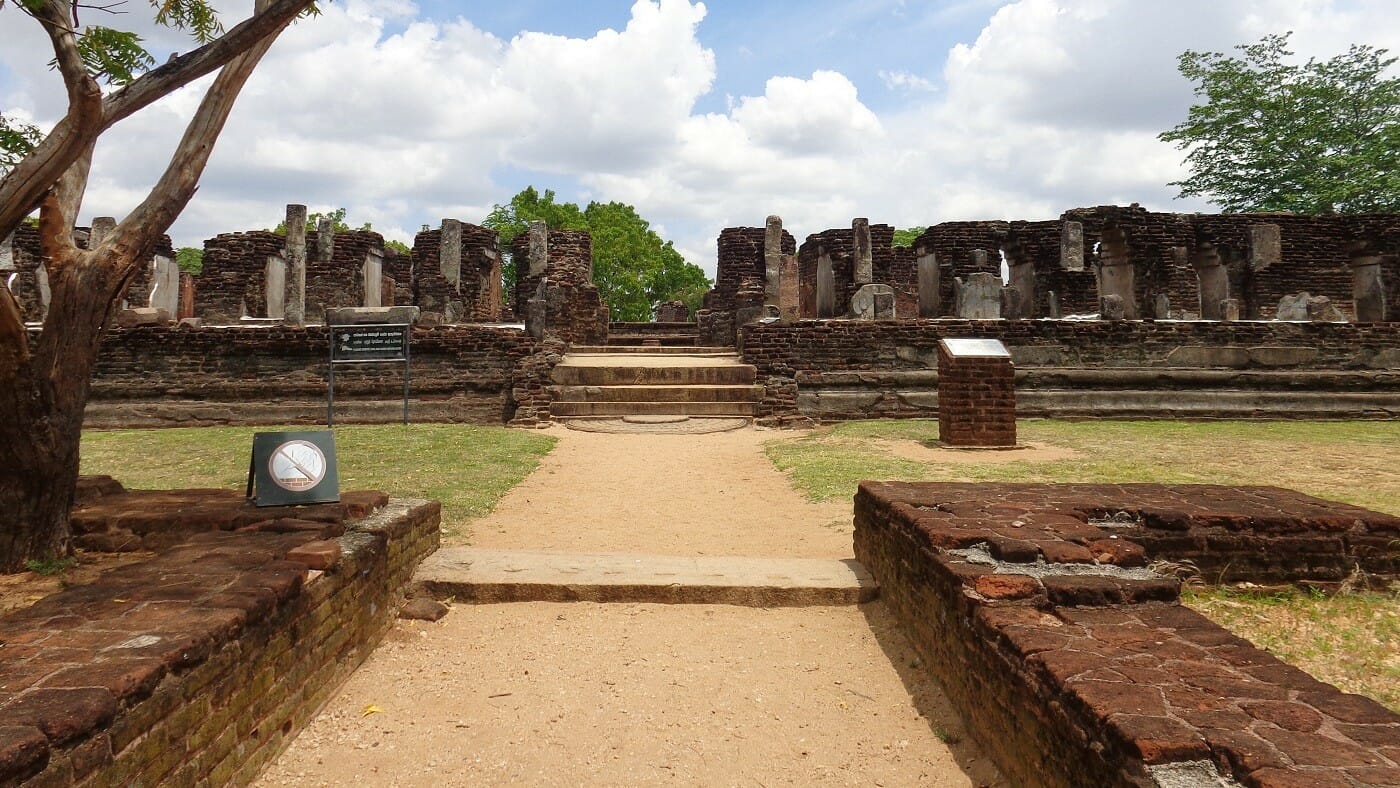
Baddhasima Prasadaya is the Pohoyageya or Uposathagharaya (Chapter House) of the monks of Alahana Piriwena where they rehearsed the codes of discipline (Especially the pati mokka). It is located in Polonnaruwa District of North Central Province, Sri Lanka. The remaining pillars and brick walls suggest that there had been a multi-storied building and according to the Mahavamsa, there had been a twelve storied building. As such, this may be the largest of the Uposathaghara in the Island. The central Platform of the building was to locate the relic casket while four monks seated on the stone pedestal facing the cardinal directions read the code of Read more...
Favorite
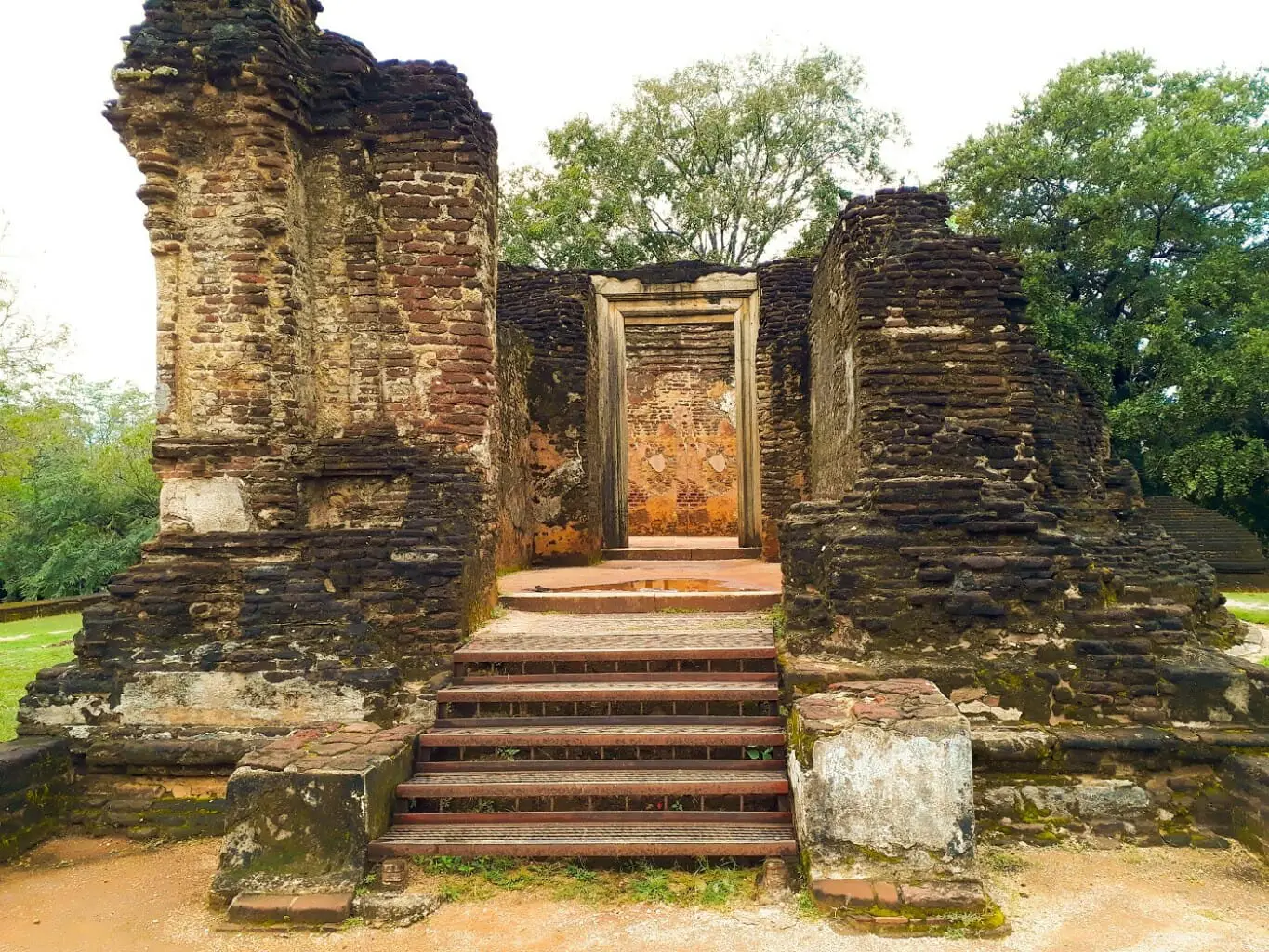
Pothgul Vehera is located in the Polonnaruwa District of North Central Province, Sri Lanka. The Sinhalese name “Pothgull” has the meaning of “place to store books”. As such, with the other historical evidence, this ancient place has been identified as the oldest Buddhist library complex in the country. It was built by the King Parakramabahu the Great (1153-1186). Click here to find a list of accommodations around Polonnaruwa, Sri Lanka on Booking.com Read more...
Favorite
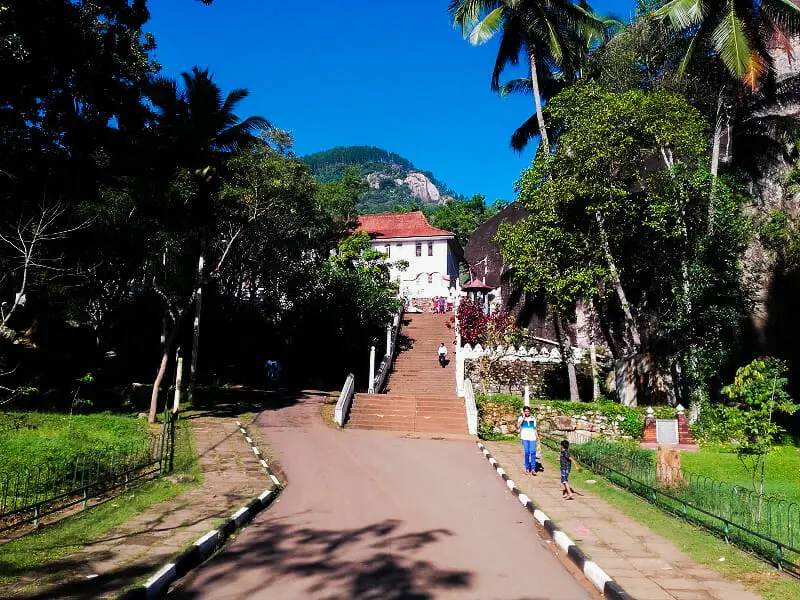
Aluvihara Rock Cave Temple (also called Matale Aluviharaya) is located in Matale district, Central Province of Sri Lanka. It is a Buddhist temple which history dates back to 3rd Century B.C to the reign of King Devanampiyatissa. The temple is the place where Tripitakas, namely Vinaya Pitakaya (Basket of Discipline), Sutta Pitakaya (Basket of Discourse) and Abhidarma Pitakaya (Basket of Metaphysics) wrote in Ola leaves during the reign of King Walagamba. The Museum This slideshow requires JavaScript. Balumge This slideshow requires JavaScript. Read more...
Favorite
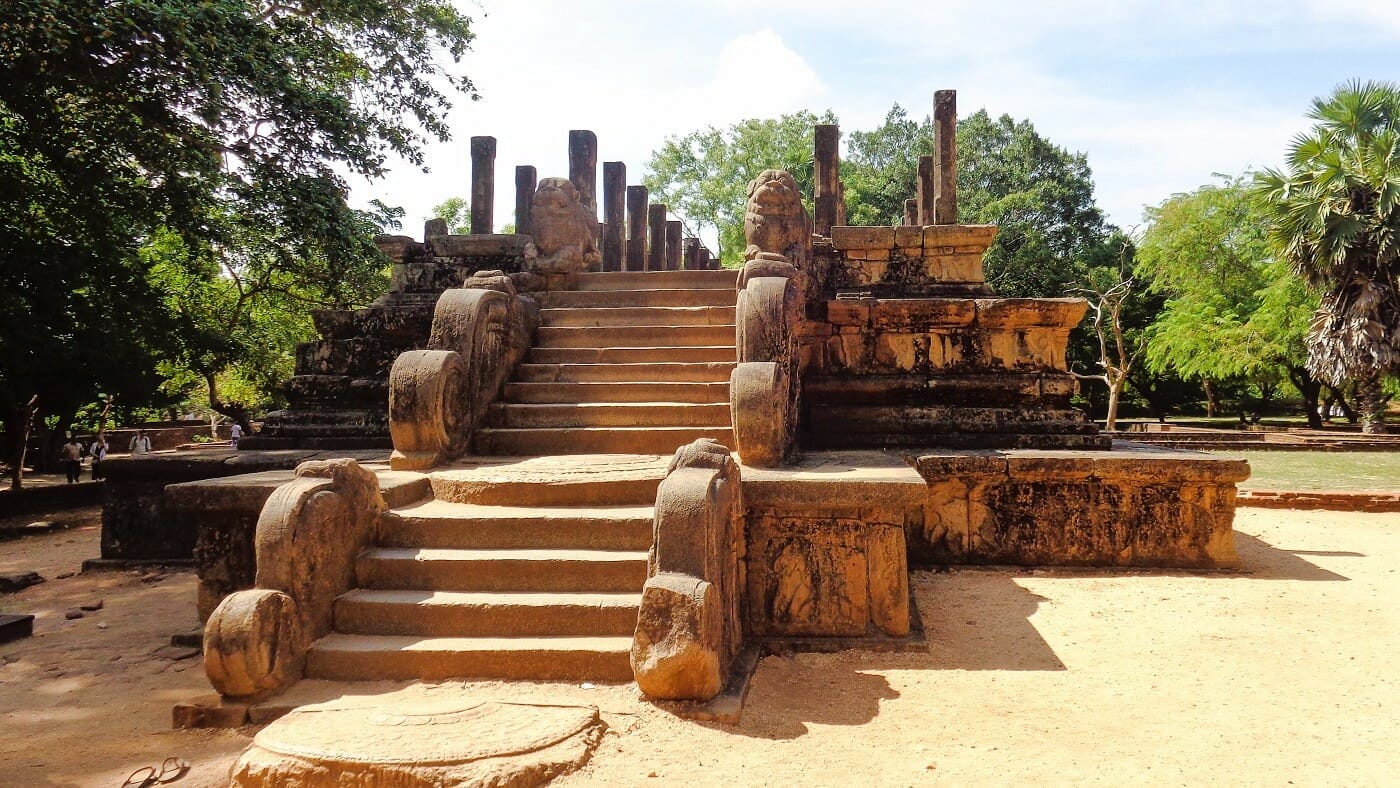
This is another ruin of the ancient city of Polonnaruwa, which is identified as a UNESCO World Heritage Site. An inscription found on the upper level of the staircase identifies this building as the Council Chamber (The Raja Sabhawa in Sinhala) of King Parakramabahu the Great who ruled the country for 33 years from 1153 – 1186 A.D. It is located in front of the Royal Palace of the King. There are two moonstones located at the beginning and the middle of the staircase. Both sides of the staircase are decorated with stone carvings. There are a number of beautifully Read more...
Favorite
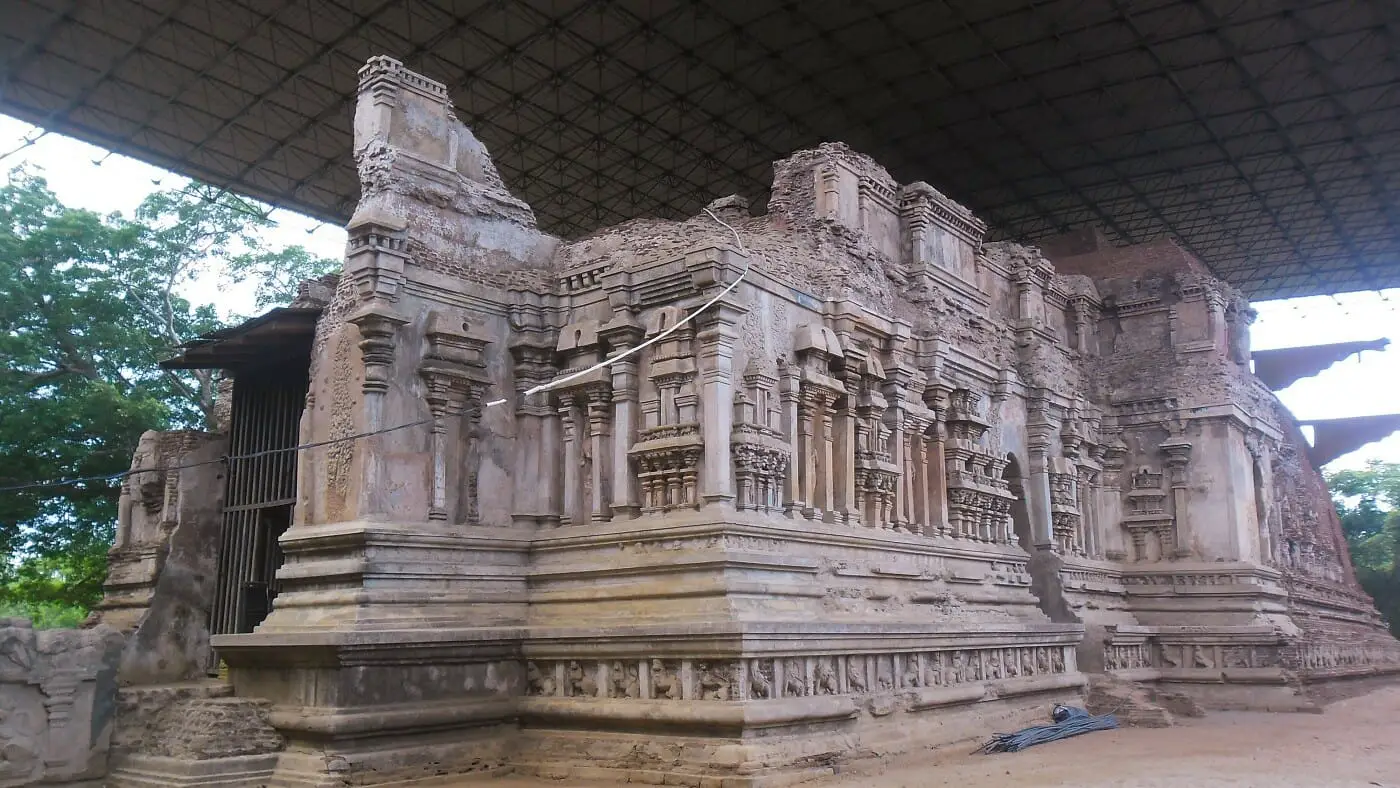
Tivanka Image House is identified as the image house of Jetavanaramaya Monastery built by the King Parakramabahu the Great (1153 – 1186). It is located in the main archaeological site of Polonnaruwa District in North Central Province, Sri Lanka. The name Tivanka (means three bends) is given due to its giant Buddha image is bent at three places, namely shoulder, hip, and knee. The image house is famous due to the paintings on its interior walls. The paintings belong to the 12th century and they depict certain incidents from Jataka Stories and the life of Buddha. Like Thuparamaya and Lankathilaka, this image Read more...
Favorite
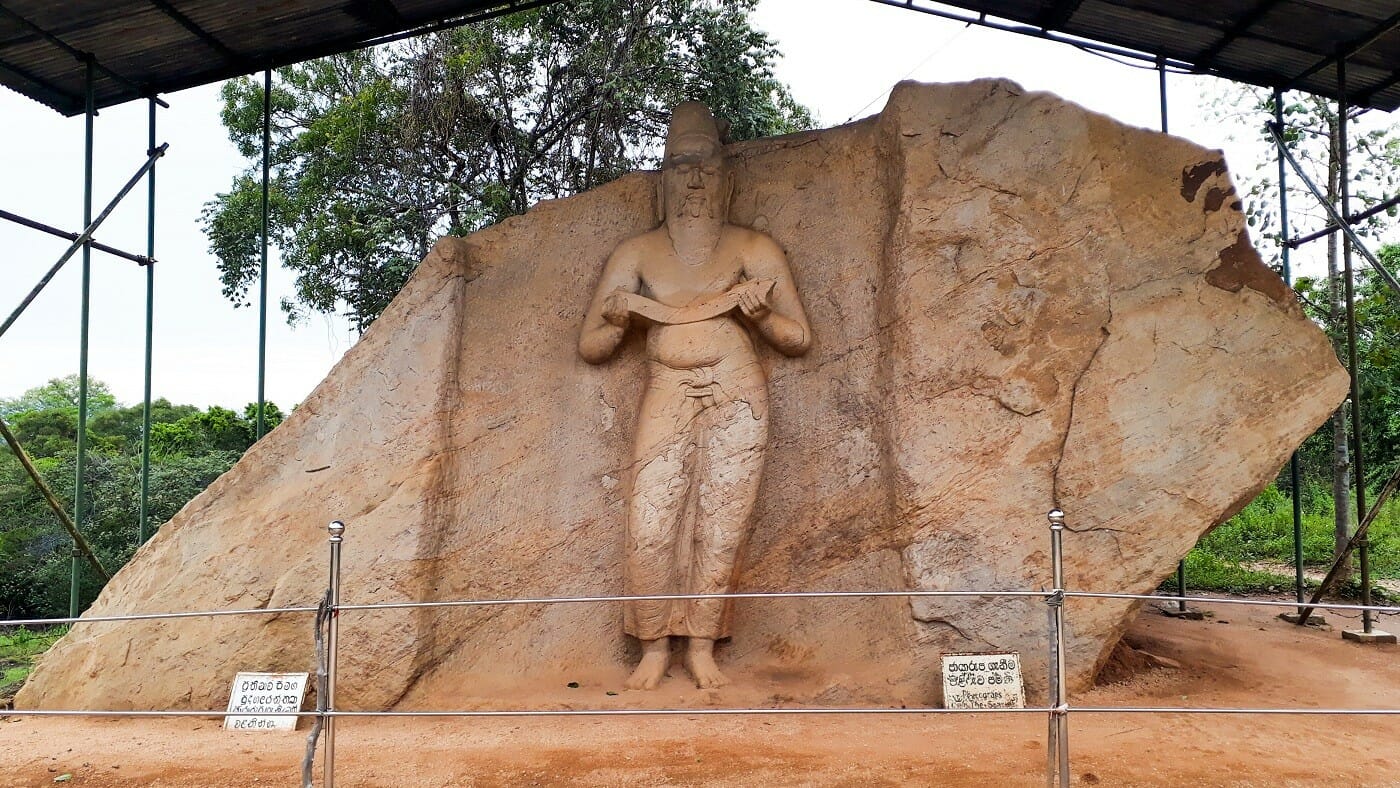
This beautifully carved ancient statue is located near the Pothgul Vehera in the Polonnaruwa District of North Central Province, Sri Lanka. The identity of this statue is not yet confirmed and some believed it to be the statue of King Parakramabahu the Great (1123–1186). And others believed that it is the statue of great Saint called Pulasthi or Kapila. The statue is about 3.5m tall and carved into a large rock boulder. Enter your current location in the search box below the map to find the best route to the statue of King Parakramabahu the Great Click here to find a list Read more...
Favorite
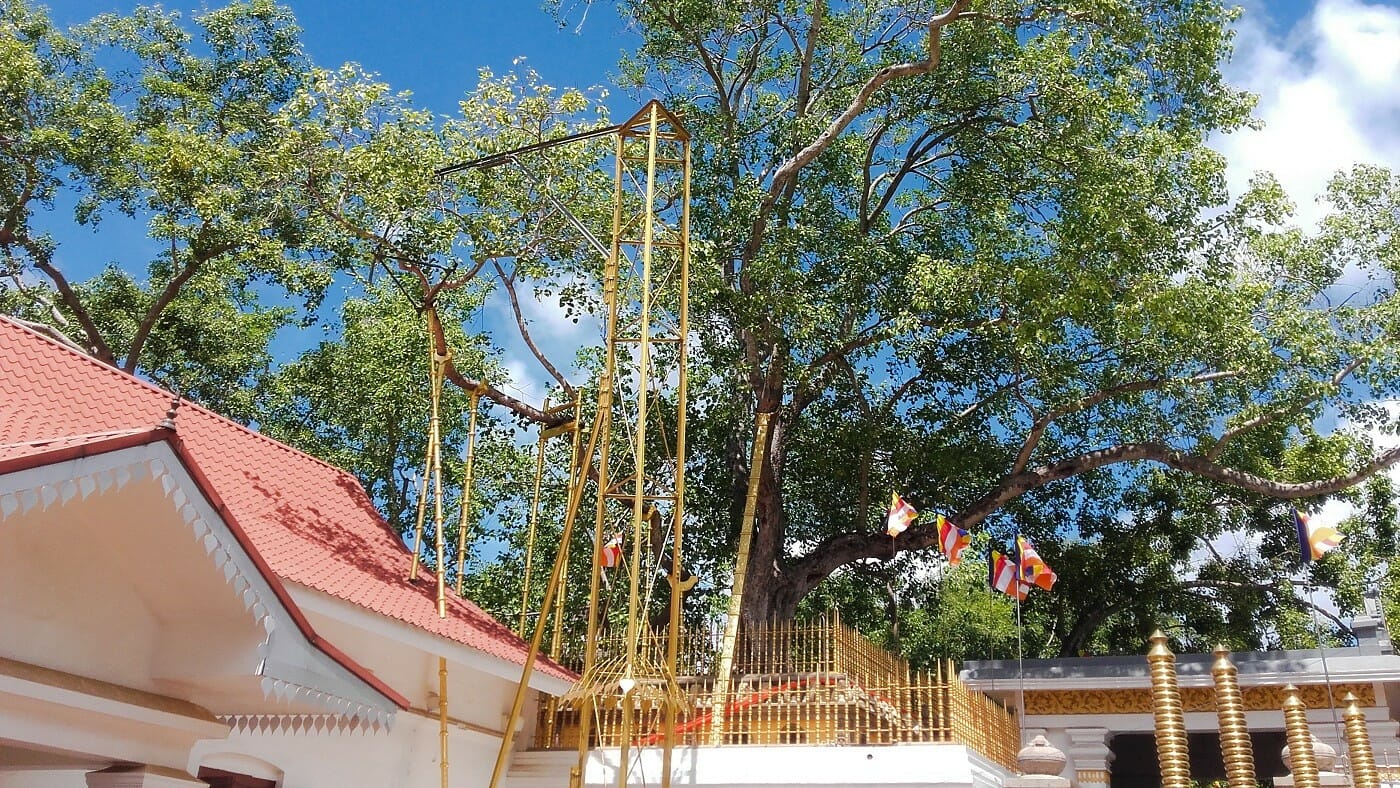
Jaya Sri Maha Bodhi is a Sacred Bo-Tree in the Mahamewna Gardens, Anuradhapura District, North Central Province of Sri Lanka. It is said to be the southern branch of the historical Sri Maha Bodhi at Buddha Gaya in India under which Lord Buddha attained Enlightenment. Jaya Sri Maha Bodhi was brought to Sri Lanka by the Theri Sangamitta, daughter of Emperor Asoka, and was planted in the Mahamewna Gardens in Anuradhapura in 288 BC by King Devanampiyatissa. Jaya Sri Maha Bodhi is the oldest living human-planted tree in the world with known planting date. Today it is one of the Read more...
Favorite
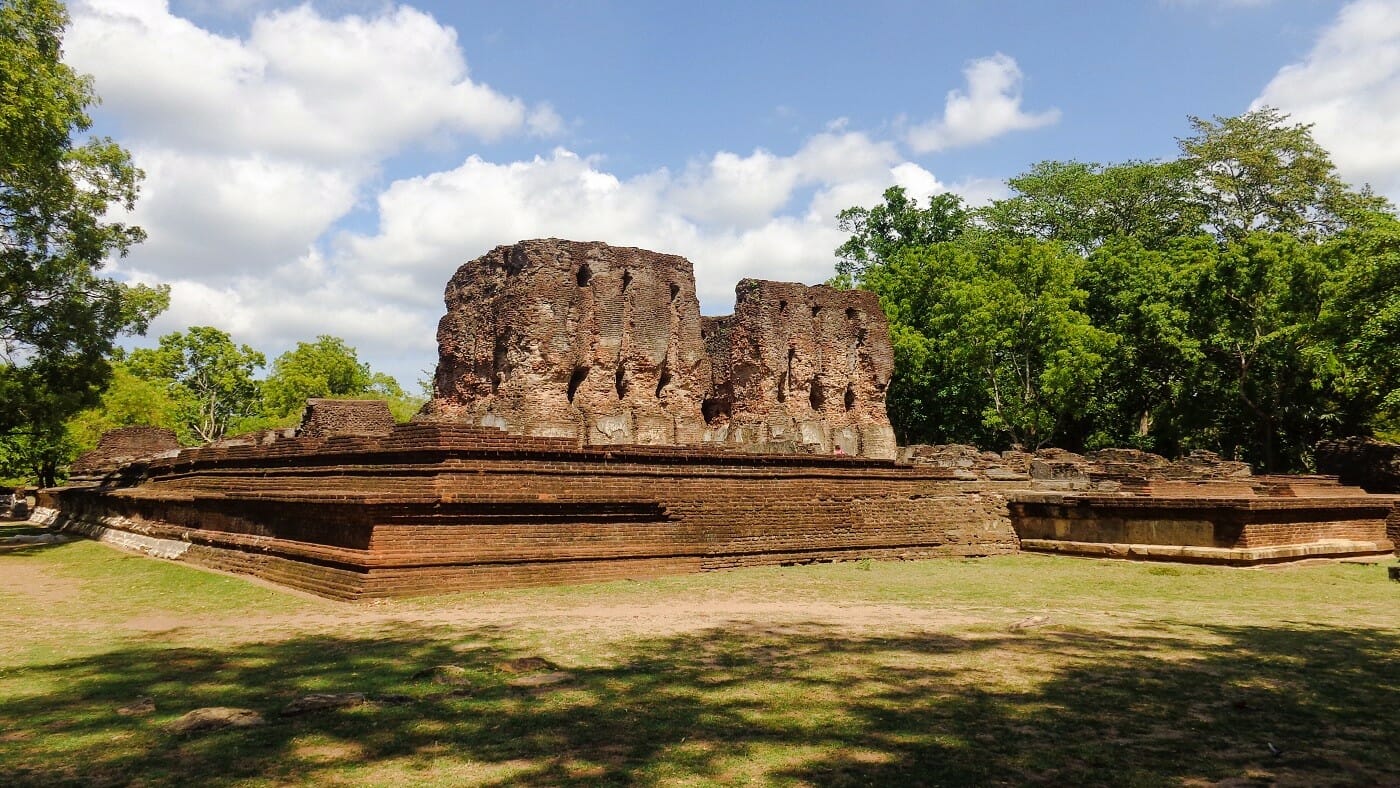
This was a 7 storeyed building with about 1000 rooms, built by the King Parakramabahu the Great (1153-1186). It is located in Polonnaruwa District of North Central Province, Sri Lanka. This place is considered to be the Palace of King Parakramabahu the Great. The Palace was called as Vijayotpaya or Vijayanta Prasada (the name of the Palace of God Sakra). Since it has consisted of 7 stories, the building also called “Sathbumupaya” (in Sinhala). The remaining huge walls with thickness over one meter and part of stairs and the foundation walls give you an idea about the size of the building. Read more...
Favorite
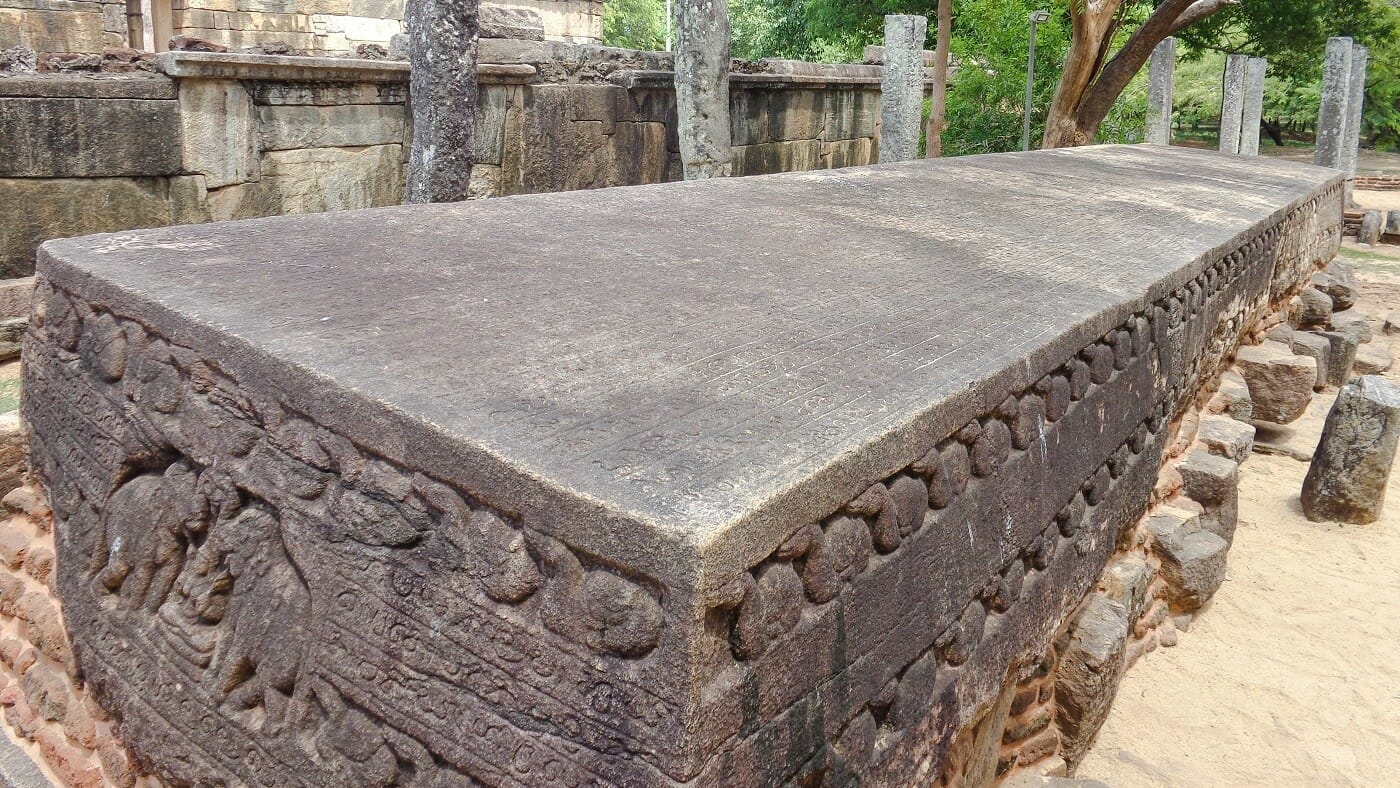
Gal Potha (Stone Book) is a giant stone inscription located in the Dalada Maluwa premises of main archaeological site in Polonnaruwa District, Sri Lanka. It is a work of King Nissankamalla (1187-1196) and it is the largest stone inscription discovered so far. The inscription itself tells that this large stone was transported from Minintale, some hundred kilometers away from Polonnaruwa. It describes the genealogy, heroic and altruistic deed of King Nissankamalla. The letters of the inscription were embossed with molten iron. The figure of the woman on the side face of the stone on whom two elephants are sprinkling water has been identified as Goddess Gajalakshmi (Goddess Read more...
Favorite
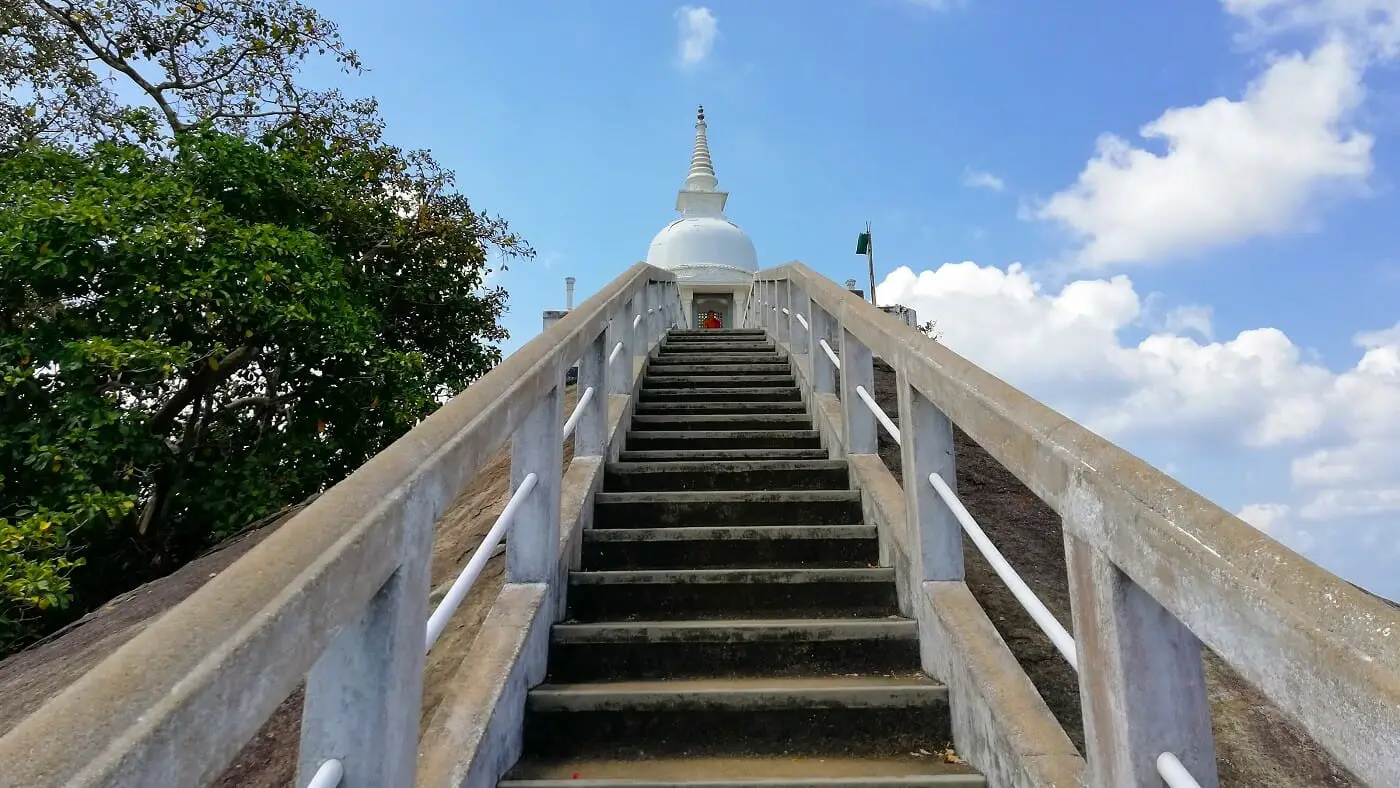
Enderagala Wana Senasuna is a Buddhist temple in a calm and quiet location in Dambulla in the Matale District of Sri Lanka. According to the inscription found in the caves, the history of this temple dates back to the 2nd – 1st century B.C. The temple is located beside the Ambepussa – Kurunegala – Trincomalee (A006) Highway, only 6km away from the Dambulla city. You can reach Enderagala Wana Senasuna withing15 minutes from Dambulla Cave Temple. The Stupa of the temple is located in a rock summit provide panoramic, 360-degree view of the area. On a clear day, you can Read more...
Favorite
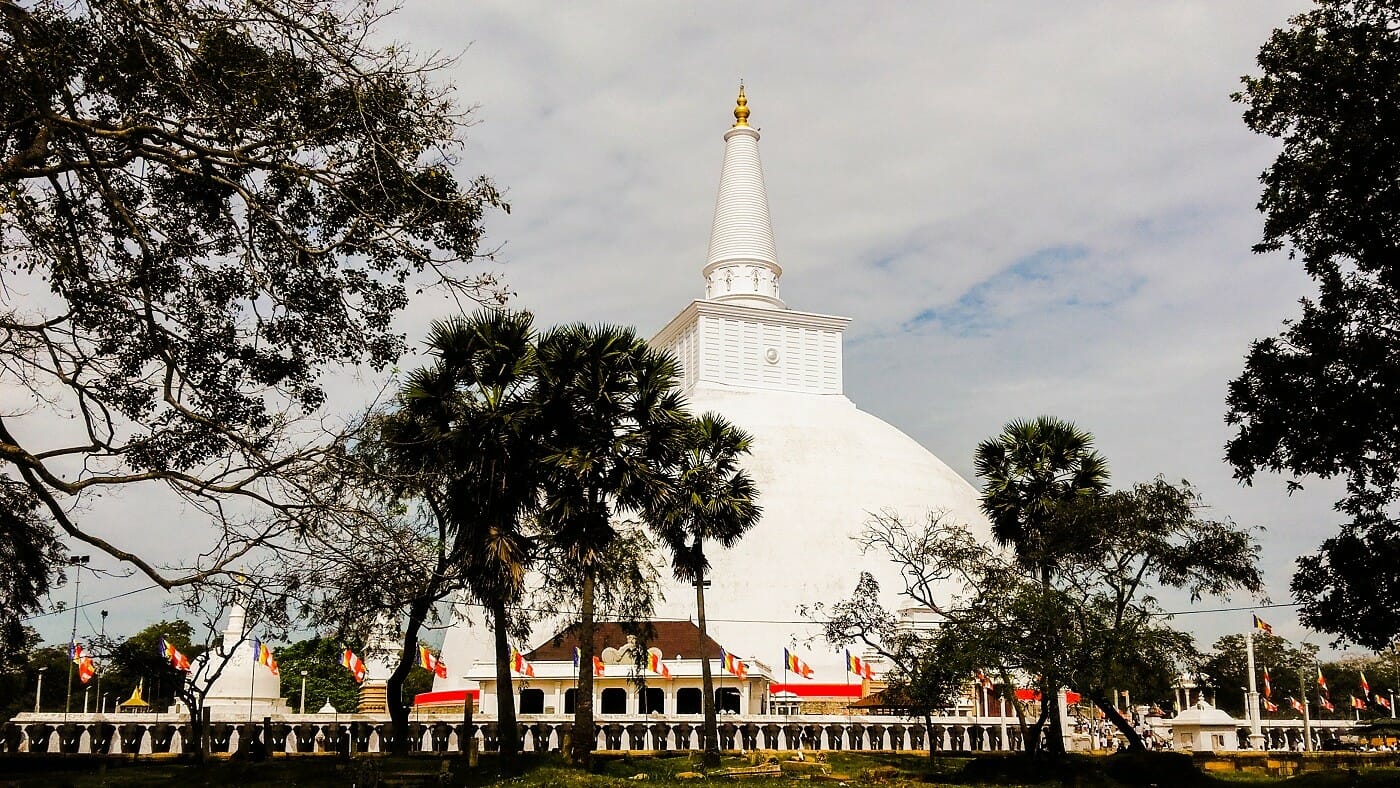
The Ruwanwelisaya is a stupa in Anuradhapura District in North Central Province of Sri Lanka, considered a marvel for its architectural qualities and sacred to many Buddhists all over the world. This is one of the Solosmasthana and Atamasthana. This was built by King Dutugemunu in 140 B.C. The stupa is also known as Ruwanweli Maha Seya, Swarnamali Chaitya, Rathnamali Dagaba and Mahathupa. Read more...
Favorite
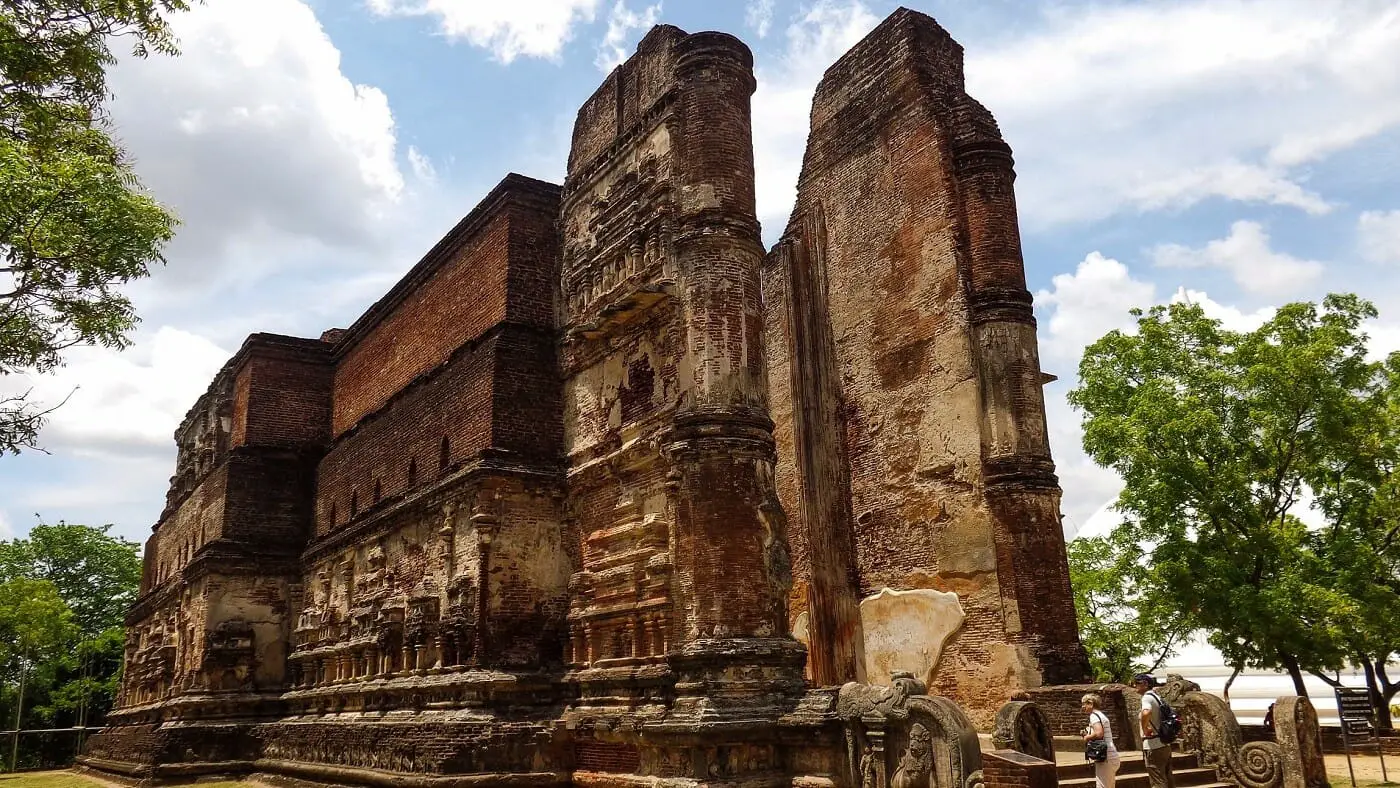
Lankathilaka Vihara is a vaulted type (gedige) image house located in Polonnaruwa District of North Central Province, Sri Lanka. It was built by King Parakramabahu the Great (1153-1186 A.D.). This image house is considered to be the largest image house built in ancient Sri Lanka. There is evidence that the image house has been renovated during the Dambadeniya Period (13th century A.D.). The giant standing Buddha statue, two pylons at the entrance, and the remaining walls signify the extent of it. The building, including the giant Buddha statue, is completely built with clay bricks. According to some chronicles, the building has Read more...
Favorite
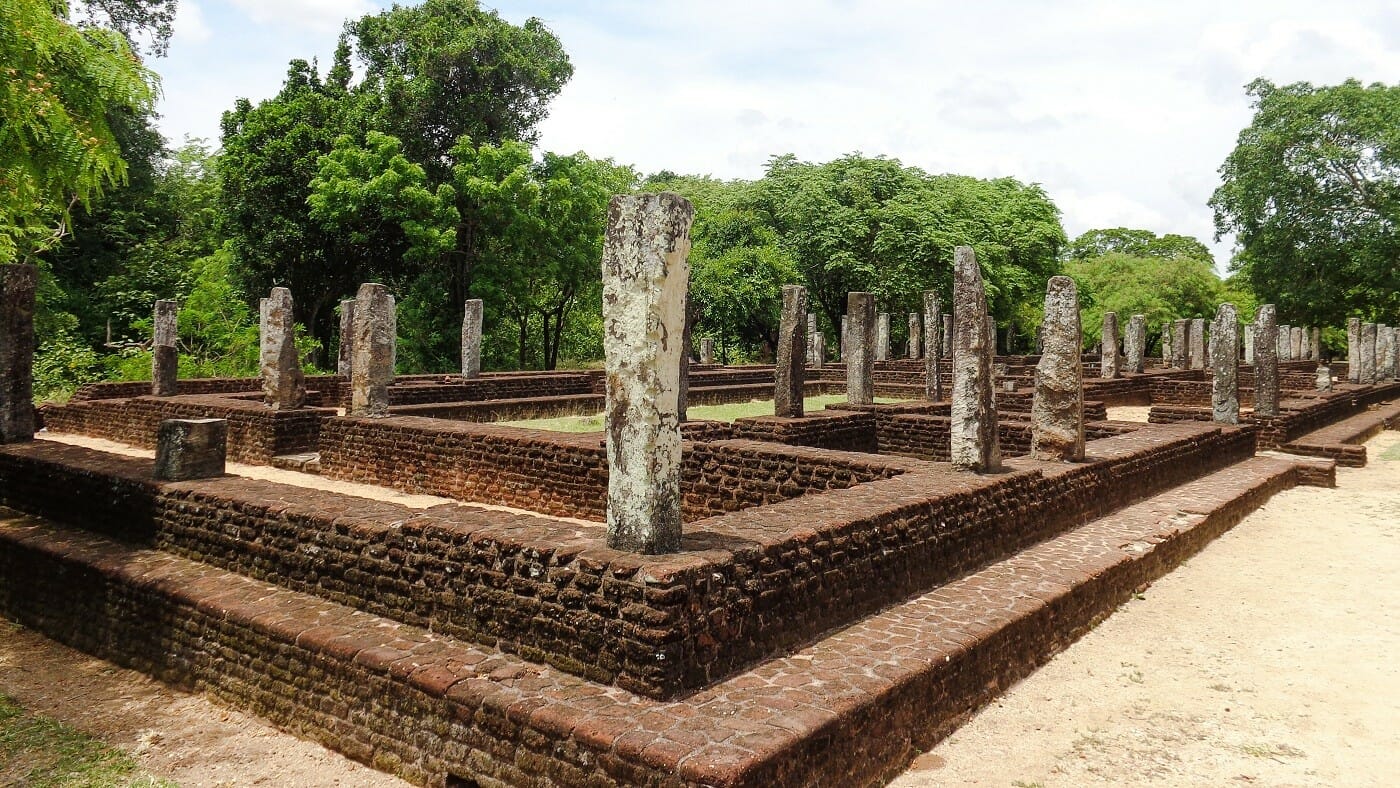
This monastic hospital is located in the Alahana Piriwena premises of the main archaeological site in Polonnaruwa District of North Central Province, Sri Lanka. The archaeological excavations have confirmed this building as a monastic hospital constructed in the 12th century. A medicine trough (Behet Oruva)made of stone is still can be seen in one room. This medicine trough had been used for treating patients by immersing in herbal oil. Several surgical and medical instruments also have been discovered during the excavations at this site. There are two main sections in this building namely living and treatment sections. Both sections have open courts Read more...
Favorite
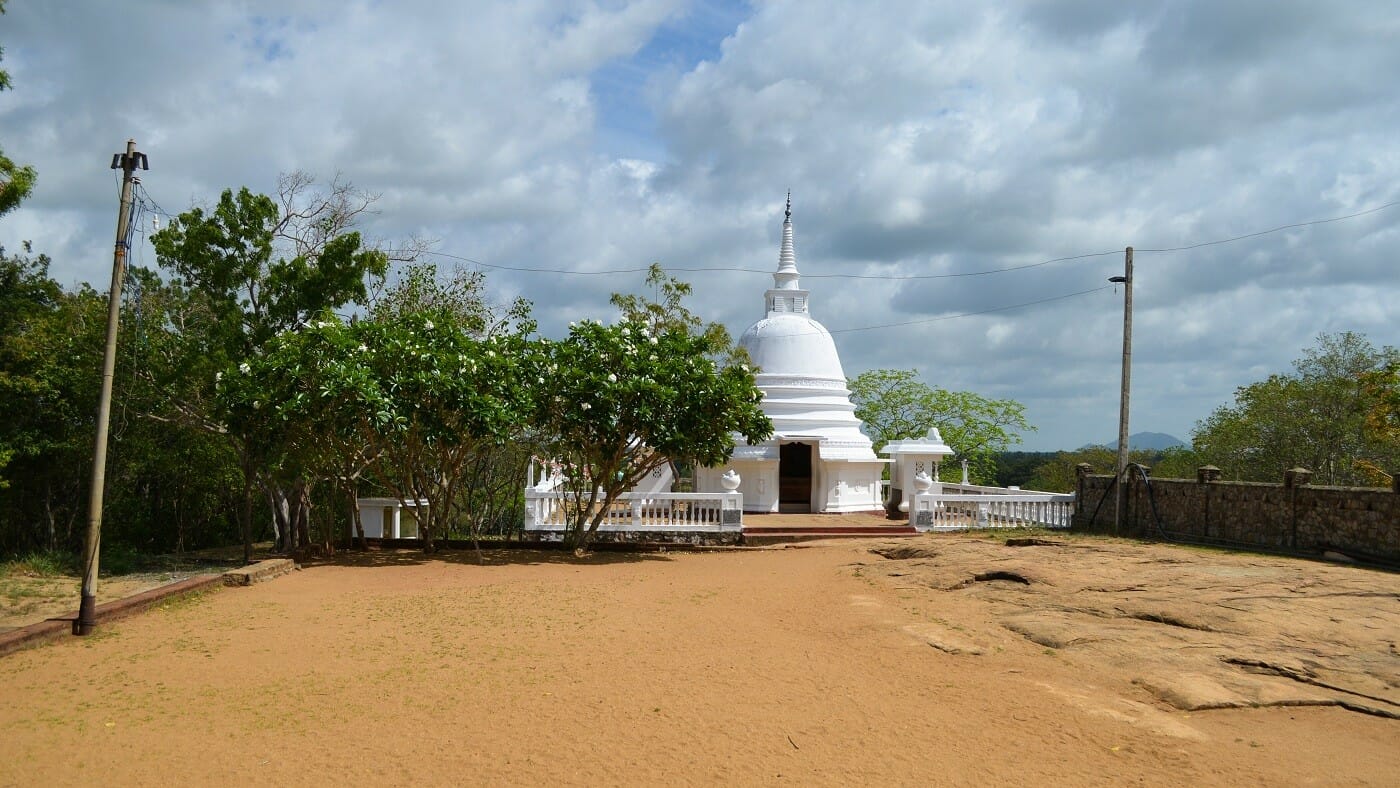
Vijithapura Rajamaha Viharaya is an ancient Buddhist temple worshiped by Buddhist all around the country. The temple is located closer to the Kala Wewa in Anuradhapura district of North Central Province, Sri Lanka. You can access this temple through Kekirawa – Galewela road and only about 10km away from the Kekirawa temple. According to the historical sources (like Mahavamsa, Deepavamsa, Tupavamsa, and Saddharmalankaraya), the history of the Vijithapura area goes back to the reign of King Vijaya (543–505 BCE). The beginning of the Vijithapura Rajamaha Viharaya is not clearly identified. However, according to the legends, the history of the temple Read more...

