
If you are a historical traveler, Sri Lanka is one of the best destination for you. Sri Lanka has many amazing historical sites. Among them, Anuradhapura and Polonnaruwa are the main tourist attractions.
Favorite
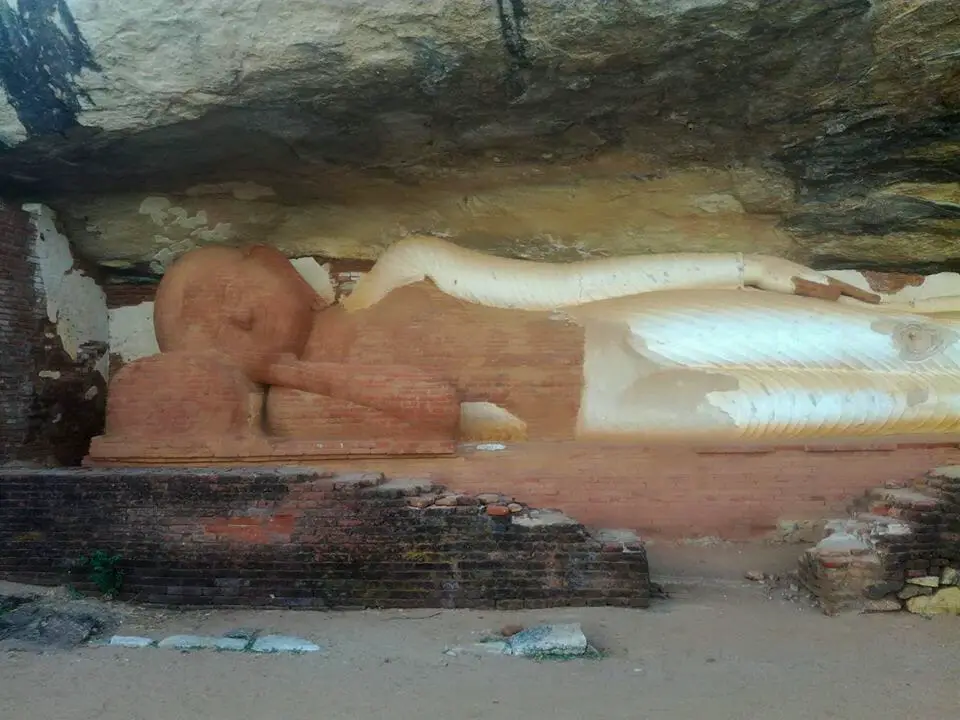
Pidurangala Rajamaha Viharaya is an ancient Buddhist monastery located in the Matale District of Central Province, Sri Lanka. The monastery was built by the King Kashyapa (473-495 CE) to relocate monks who were residing in Sigiriya rock before the construction of the fortress. Also, it is believed that this monastery has been served as the royal monastery during the reign of King Kashyapa. Pidurangala is a massive rock similar to Sigiriya, said to be just four feet short of the height of Sigiriya. From certain places at a distance, one can see the view of both Sigiriya and Pidurangala. Surrounding the Pidurangala Read more...
Favorite
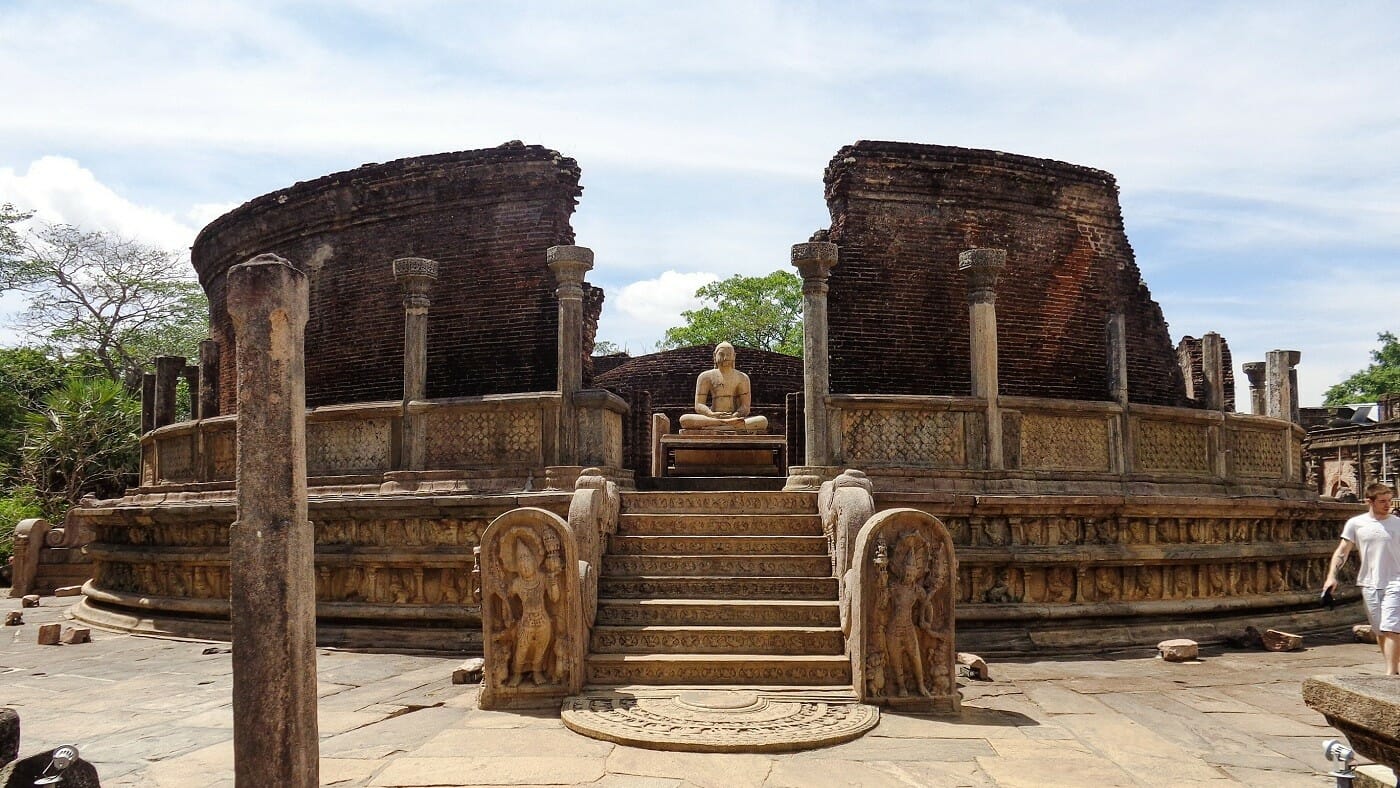
Polonnaruwa Vatadage belongs to the Polonnaruwa Kingdom. It is a structure which is built encircling the stupa for protection. It is believed that the structure was built during the reign of King Parakramabahu I (1123–1186) to hold the Sacred Tooth Relic of Lord Buddha. However, this has been renovated during the reign of King Nissanka Malla (1187 – 1196). One of the four Buddha statues on the upper platform This is the most famous Vatadage among the other Vatadage structures found in Sri Lanka. It has two stone platforms and only single entrance is there to access the lower platform. Read more...
Favorite
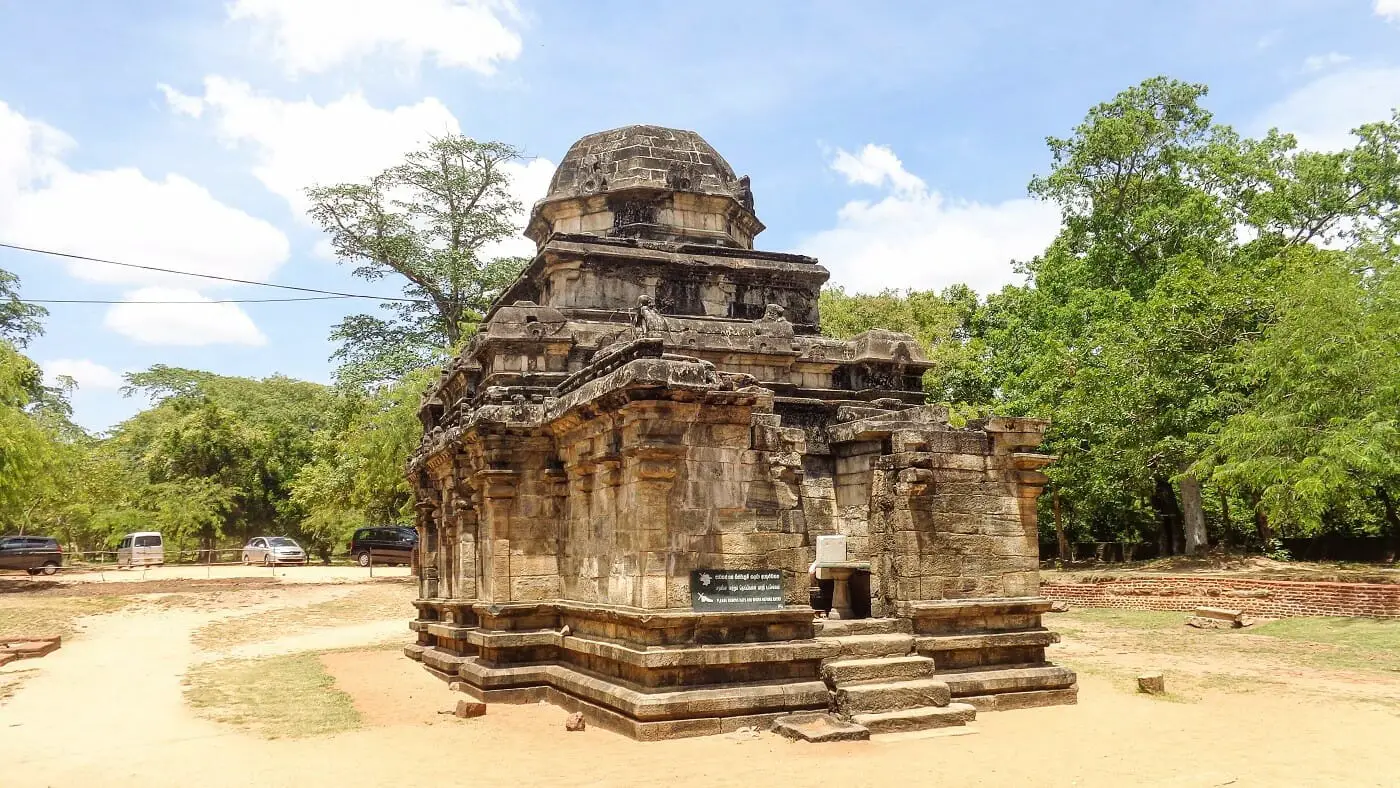
This Siva Devalaya is the oldest Hindu shrine found in the Ancient City of Polonnaruwa, Sri Lanka. It was built by king Raja Raja I (985 – 1014 A.D.). According to an inscription found, this place has been dedicated to the consort of the King. Read more...
Favorite
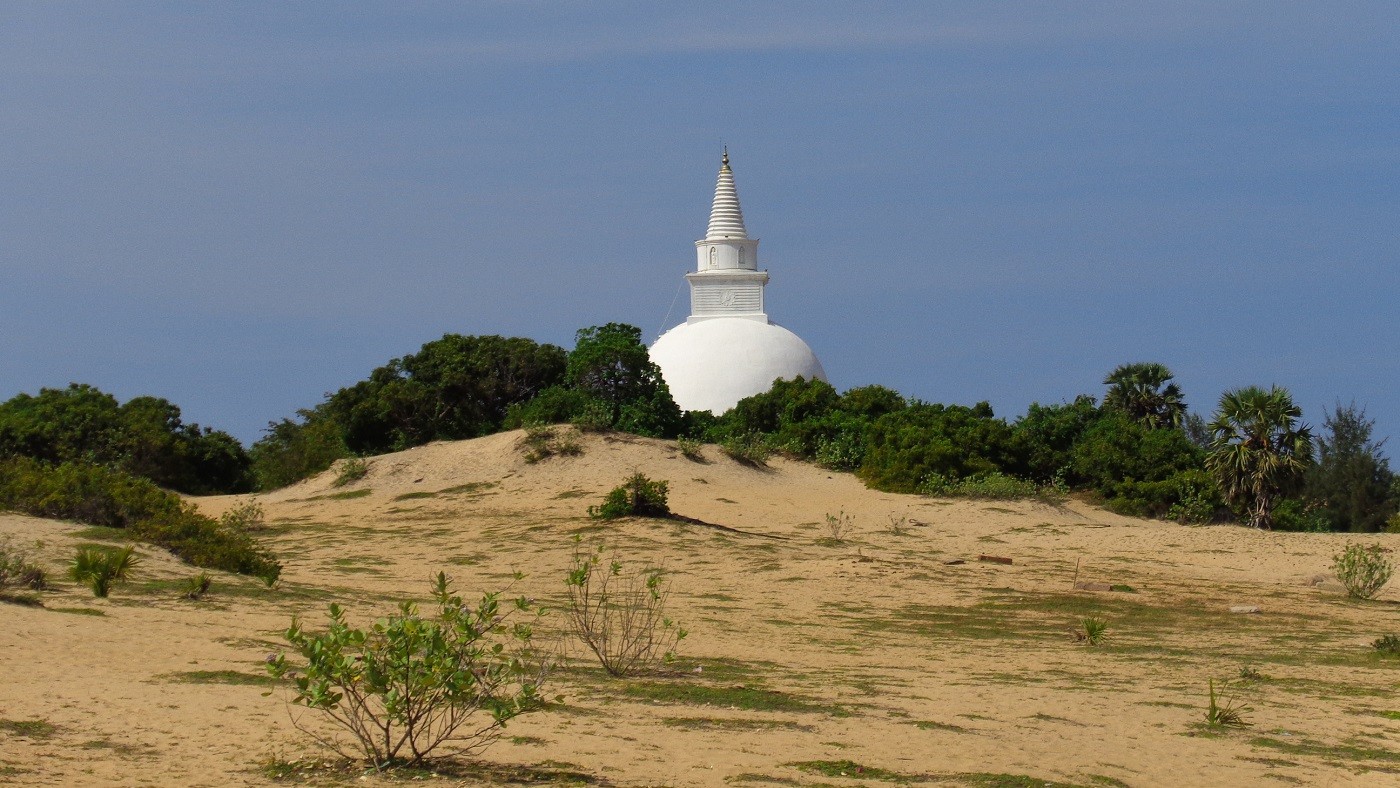
Ranmasu uyana is pleasure garden of the ancient royals of Sri Lanka. It is located in between Thissa Wewa and Isurumuniya temple in Anuradhapura district of North Central Province. The garden is spreaded over 40 acres. This is a good example of ancient Sri Lankan garden architecture. Establishment of this “Ran Masu Uyana” has been carried out to full fill the essential necessity of a royal park and this was built on the right side of the Maha Vihara premises. Inscription of Vessagiriya, established by King Mihindu IV in the 10th century A.D., has identified this as the “Ranmasu Uyana”. Meaning Read more...
Favorite
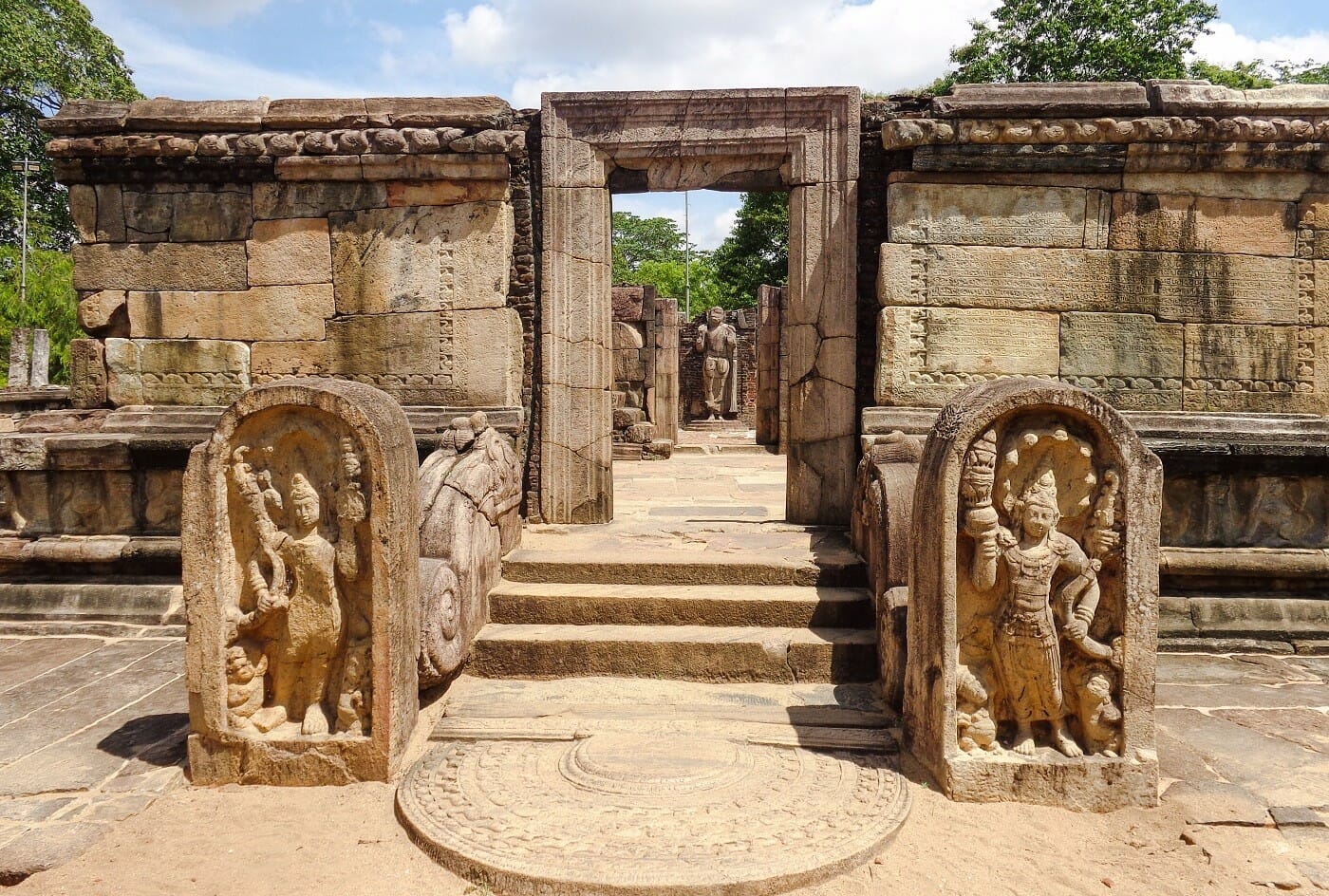
Muhudu Maha Viharaya is a Buddhist temple located in the Ampara District of Eastern Province, Sri Lanka. According to the historical evidence, the history of this temple goes back to the reign of King Kavantissa (205-161 B.C.). The temple is located on the Potuvil coast and it is believed to be the place where Viharamahadevi, the daughter of King Kelani Tissa was landed as said in the legend. External Links මුහුදු මහ විහාරයේ අද කතාව – Silumina Muhudu Maha Vihara – Department of Archaeology Three women in Sinhala history – The Island Read more...
Favorite
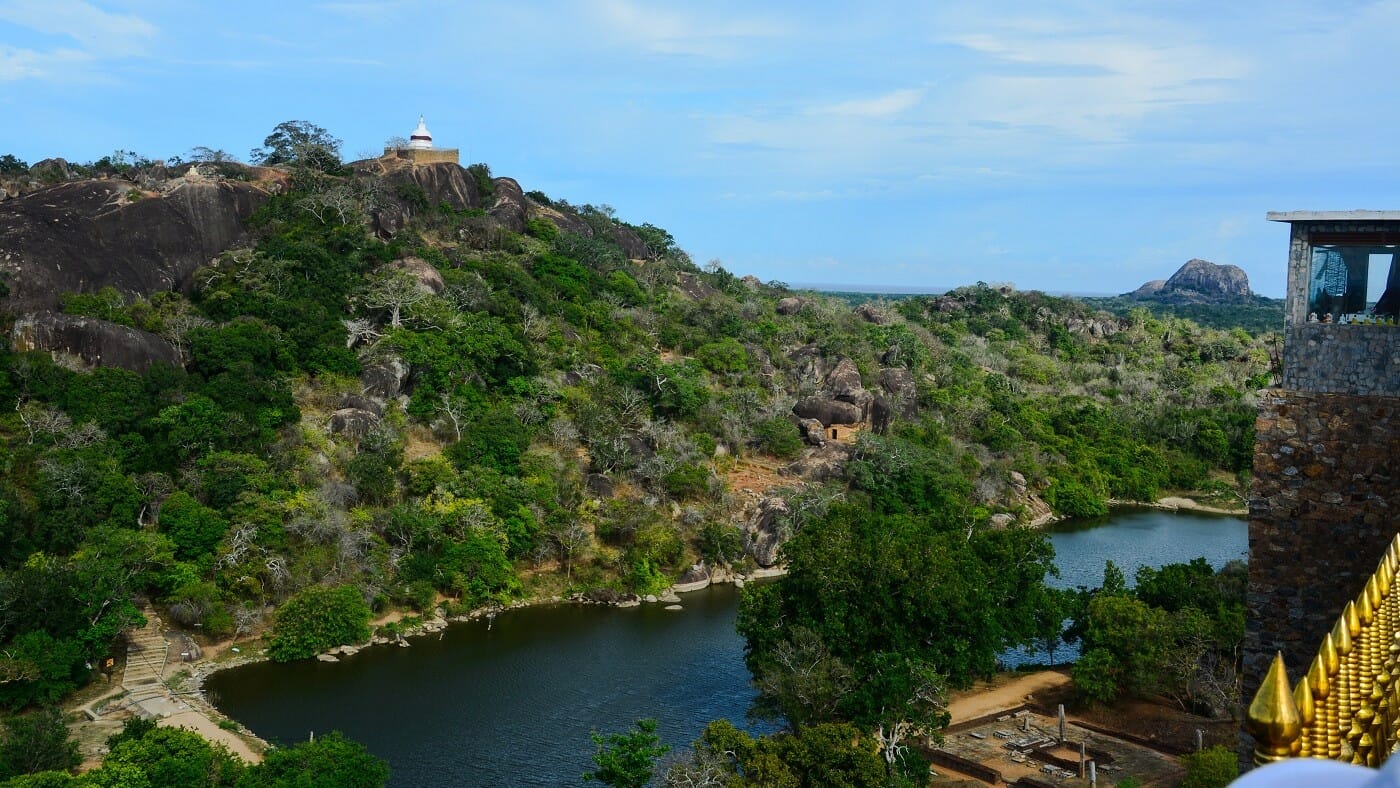
Hatadage is an ancient shrine in the Polonnaruwa District of North Central Province, Sri Lanka. It was built by the King Nissanka Malla (1187-1196 A.D.). This had been used to place the sacred tooth relic of Lord Buddha. According to historical sources, the shrine has built in sixty hours. The English translation of the Sinhalese word “Hata” is sixty, represent the duration of the construction period and the word “Dage” has the meaning of “relic shrine”. The remaining features of the building for today, evidence that the shrine was originally a two-story building. The shrine is 120 ft in length Read more...
Favorite
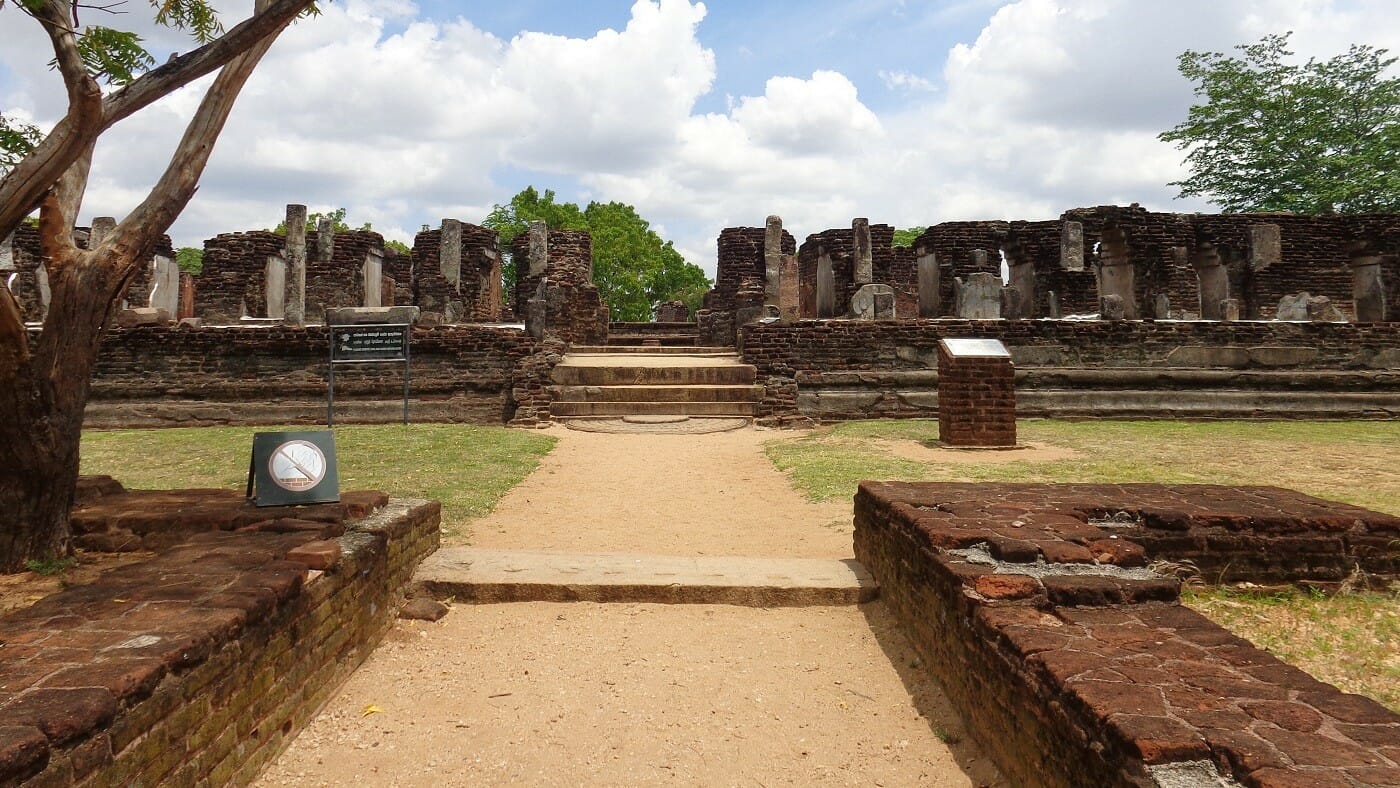
Sithulpawwa Rajamaha Viharaya is one of the greatest ancient Buddhist monasteries located in the Hambanthota District in the Southern Province of Sri Lanka. The history of the monastery dates back to 2nd century BC. It is believed that this place was built by King Kawanthissa ( 205–161 BC). According to Buddhist literature, this place was a center for Buddhist education for Buddhist monks, and once there had been 12,000 arhat monks around this location. Many caves, temples, images, houses, stupas, and ponds located around this large area bear witness to this story. Read more...
Favorite
Baddhasima Prasadaya is the Pohoyageya or Uposathagharaya (Chapter House) of the monks of Alahana Piriwena where they rehearsed the codes of discipline (Especially the pati mokka). It is located in Polonnaruwa District of North Central Province, Sri Lanka. The remaining pillars and brick walls suggest that there had been a multi-storied building and according to the Mahavamsa, there had been a twelve storied building. As such, this may be the largest of the Uposathaghara in the Island. The central Platform of the building was to locate the relic casket while four monks seated on the stone pedestal facing the cardinal directions read the code of Read more...
Favorite
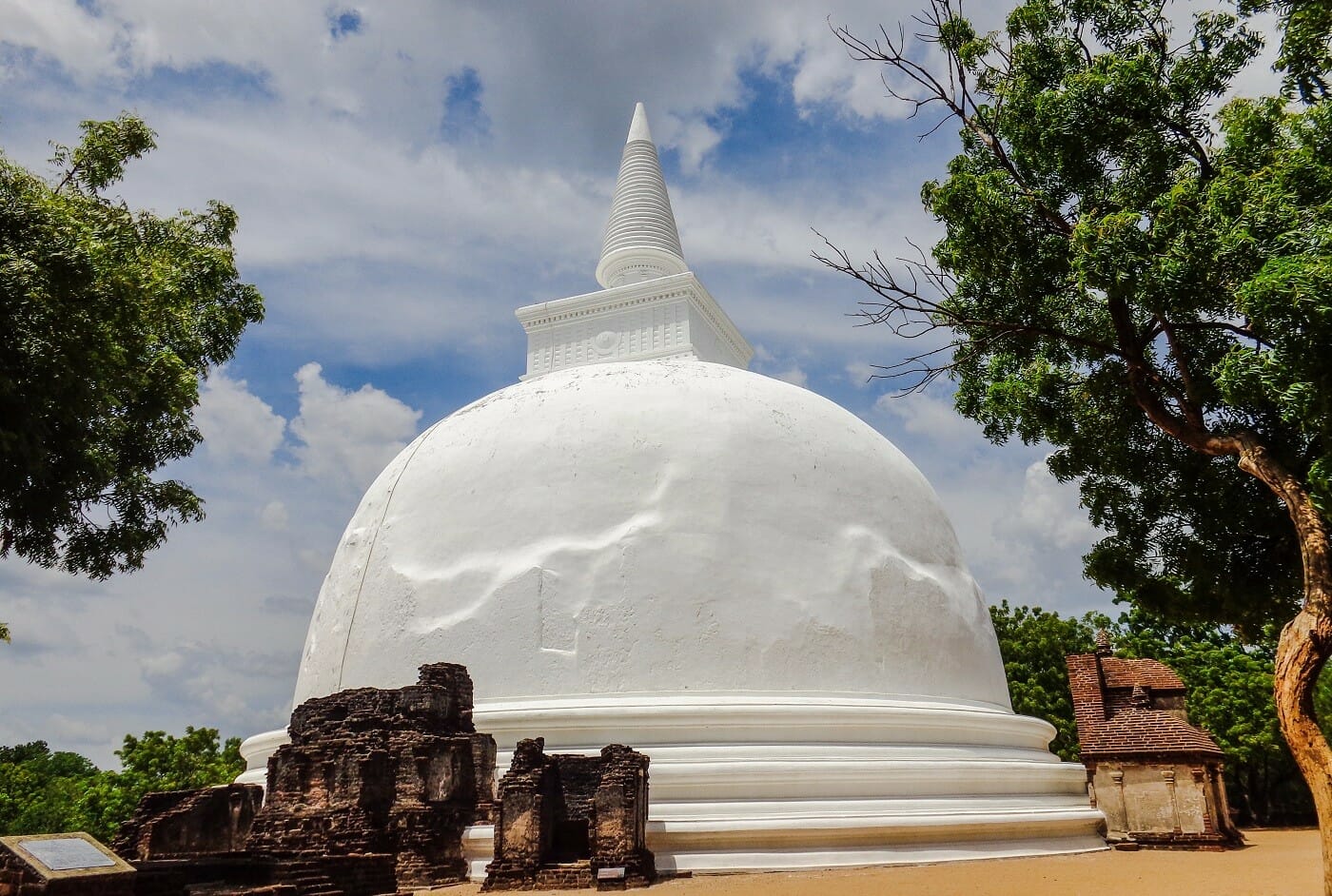
This stupa popularly known as Kiri Vehera is located in Polonnaruwa District of North Central Province, Sri Lanka. The stupa is also a part of the archaeological site called Alahana Pirivena. The origin of this stupa not exactly traced yet. However, it is speculated that this was done by Queen Subhadra, a consort of King Parakramabahu the Great (1153-1186). This is the second largest stupa in Polonnaruwa. The lime plaster of the dome is better preserved compared to the most of other stupa found in Polonnaruwa. Probably the present name “Kiri Vehera” also derived due to this preserved lime plaster. Read more...
Favorite
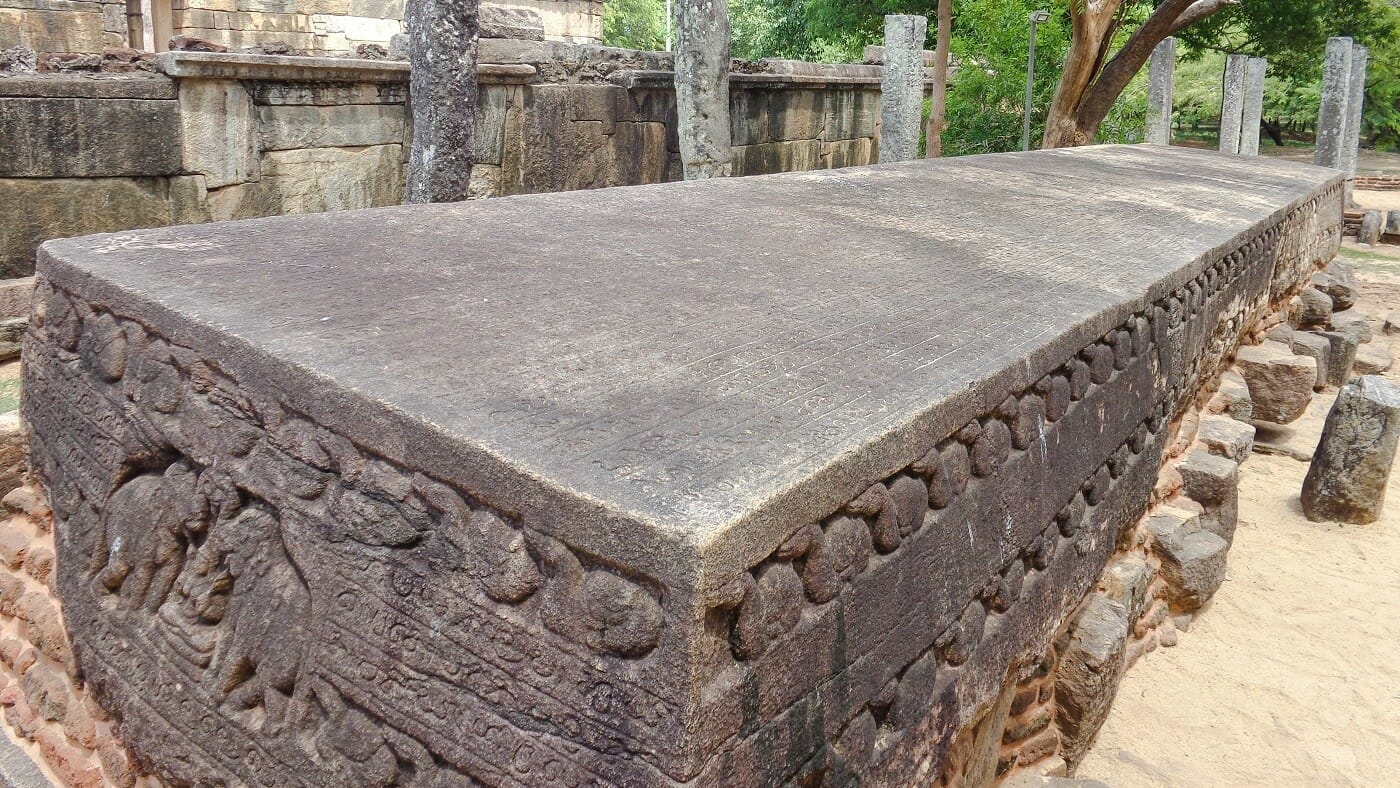
Gal Potha (Stone Book) is a giant stone inscription located in the Dalada Maluwa premises of main archaeological site in Polonnaruwa District, Sri Lanka. It is a work of King Nissankamalla (1187-1196) and it is the largest stone inscription discovered so far. The inscription itself tells that this large stone was transported from Minintale, some hundred kilometers away from Polonnaruwa. It describes the genealogy, heroic and altruistic deed of King Nissankamalla. The letters of the inscription were embossed with molten iron. The figure of the woman on the side face of the stone on whom two elephants are sprinkling water has been identified as Goddess Gajalakshmi (Goddess Read more...
Favorite
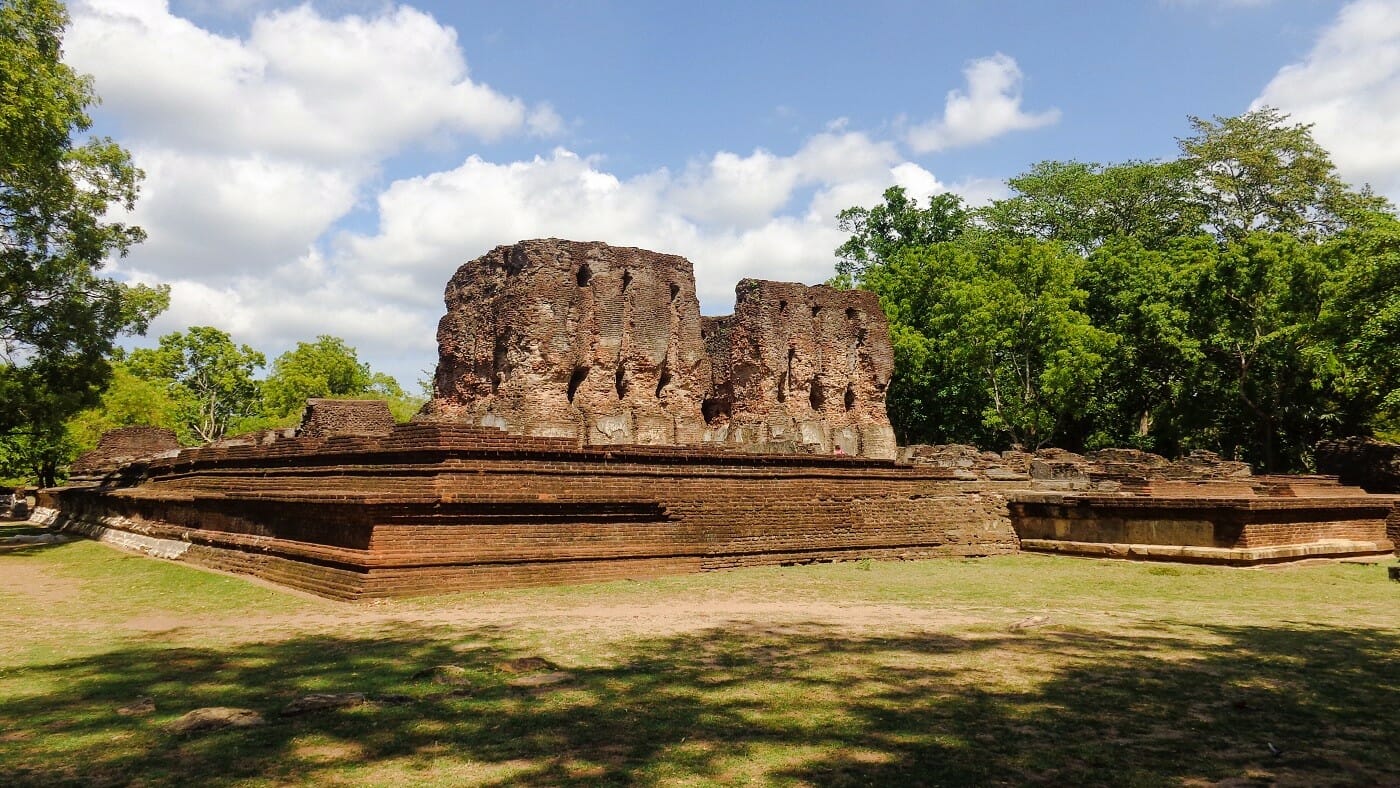
This was a 7 storeyed building with about 1000 rooms, built by the King Parakramabahu the Great (1153-1186). It is located in Polonnaruwa District of North Central Province, Sri Lanka. This place is considered to be the Palace of King Parakramabahu the Great. The Palace was called as Vijayotpaya or Vijayanta Prasada (the name of the Palace of God Sakra). Since it has consisted of 7 stories, the building also called “Sathbumupaya” (in Sinhala). The remaining huge walls with thickness over one meter and part of stairs and the foundation walls give you an idea about the size of the building. Read more...
Favorite
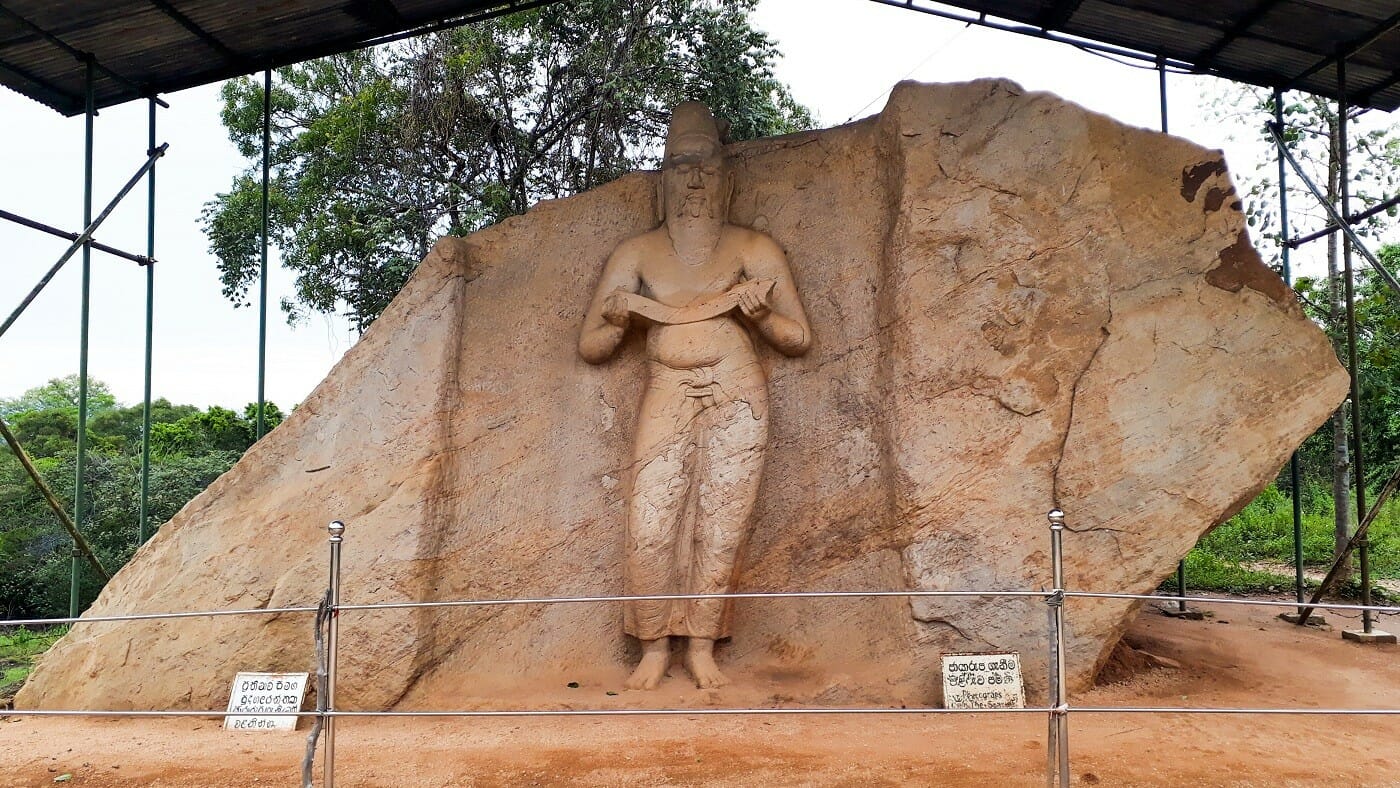
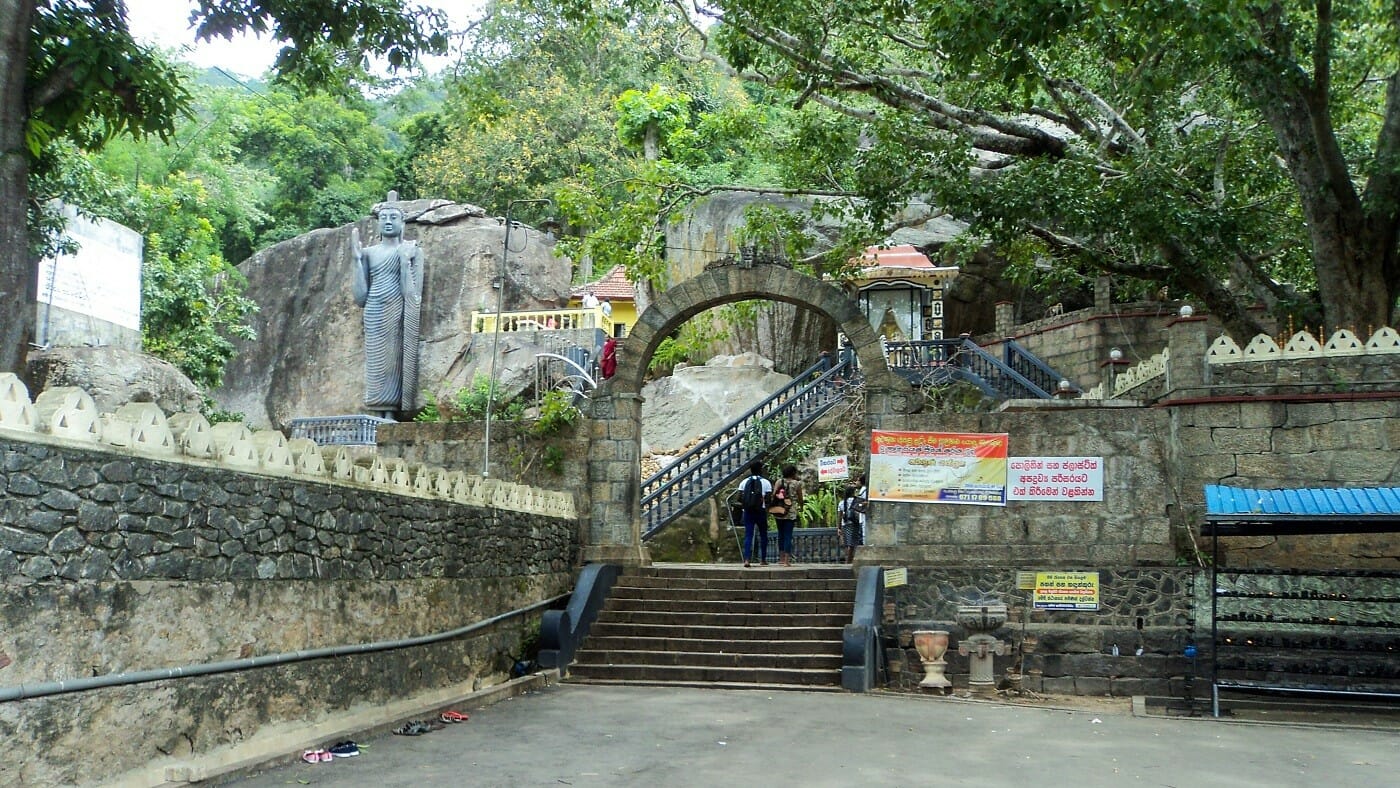
This beautifully carved ancient statue is located near the Pothgul Vehera in the Polonnaruwa District of North Central Province, Sri Lanka. The identity of this statue is not yet confirmed and some believed it to be the statue of King Parakramabahu the Great (1123–1186). And others believed that it is the statue of great Saint called Pulasthi or Kapila. The statue is about 3.5m tall and carved into a large rock boulder. Enter your current location in the search box below the map to find the best route to the statue of King Parakramabahu the Great Click here to find a list Read more...
Favorite
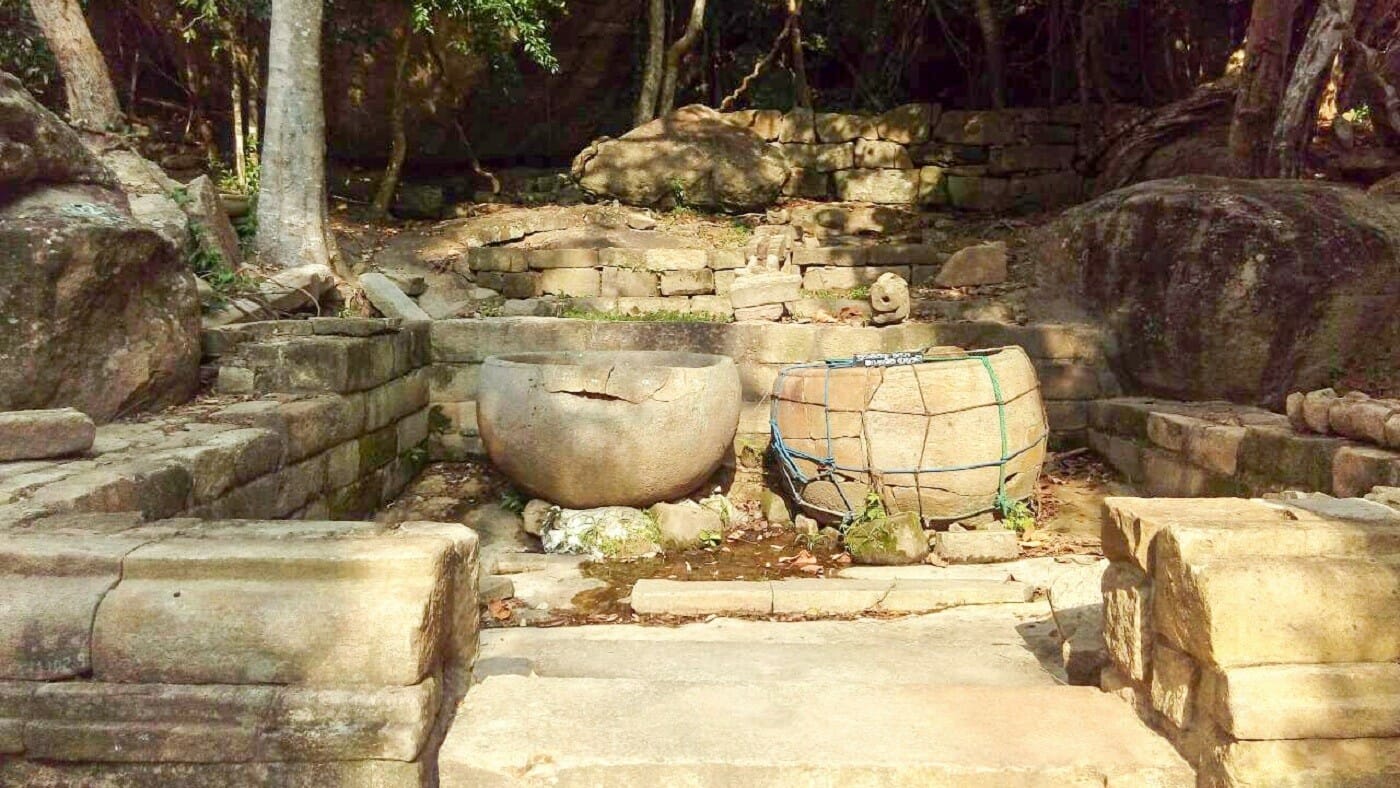
The Sankapala Raja Maha Viharaya is located in the Ratnapura District of Sabaragamuwa Province, Sri Lanka. According to rock inscription found here, the history of this temple goes back to the reign of King Dutugemunu (161-137 BC). As said by the legends, there had been Ten Giants in king Dutugemunu’s troops. The giant Pussadeva is one of them who had a special skill of blowing conch shells (“Sankha” in Sinhala) so loudly. The symbol of the giant was also the conch shell itself. After winning the Vijithapura war, the king Dutugemunu has offered this area to the Pussadeva giant. Later, he has Read more...
Favorite
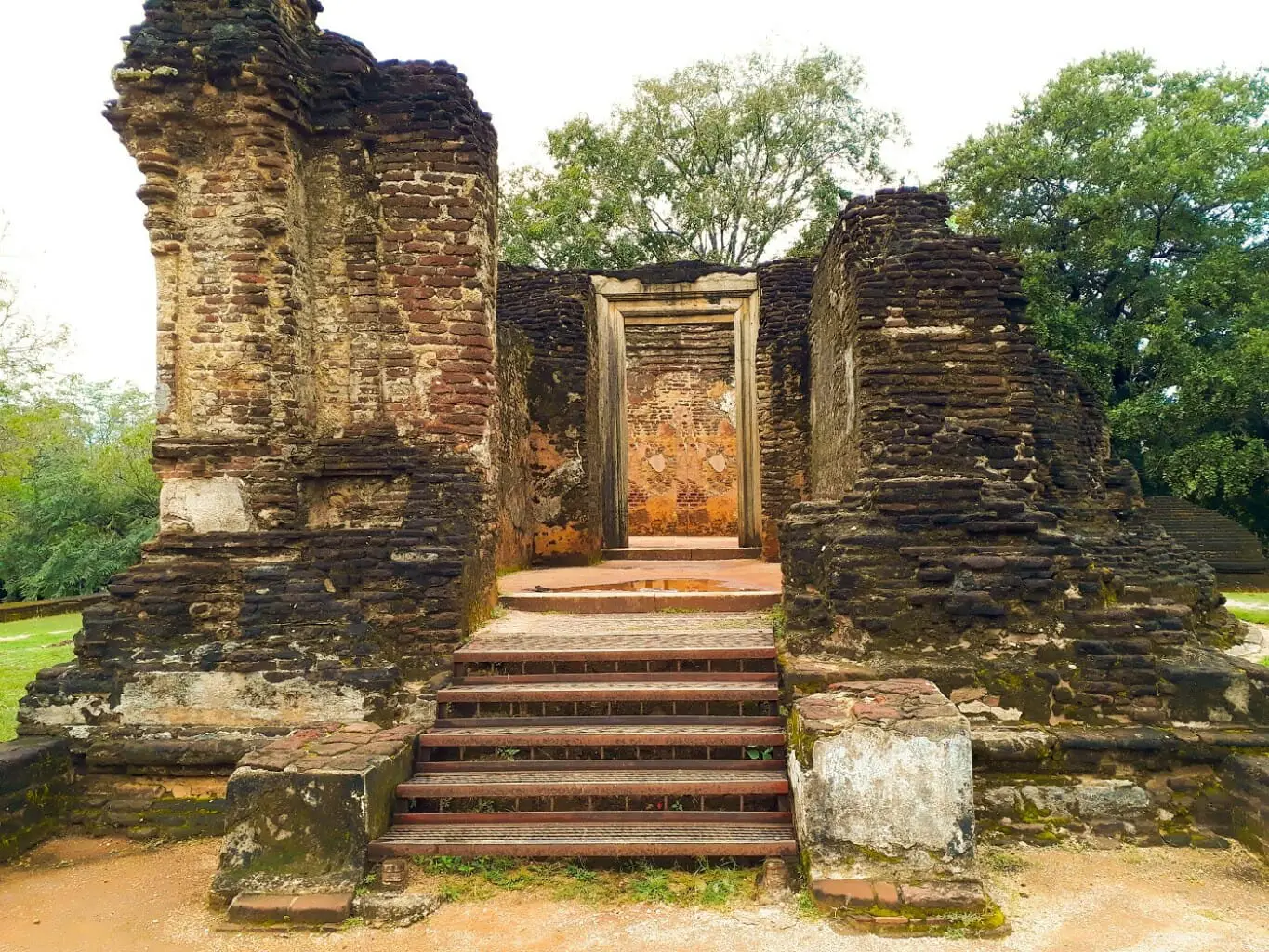
The Rajagala Monastery is a sacred site in which history dates back to the Advent of Arhath Mahinda Thera. This place is in the Uhana area of the Ampara District in Eastern Province, Sri Lanka. The archaeological excavation is still underway and it is one of the largest archaeological sites in Sri Lanka with 1025 acres. The rock inscription found here regarding the Arhat Mahinda Thera is the most valued inscription of archaeological interest. According to the archaeological discoveries, the area had been inhabited from the prehistoric times. You can read more about this site from the external links given below. Read more...
Favorite
Pothgul Vehera is located in the Polonnaruwa District of North Central Province, Sri Lanka. The Sinhalese name “Pothgull” has the meaning of “place to store books”. As such, with the other historical evidence, this ancient place has been identified as the oldest Buddhist library complex in the country. It was built by the King Parakramabahu the Great (1153-1186). Click here to find a list of accommodations around Polonnaruwa, Sri Lanka on Booking.com Read more...
Favorite
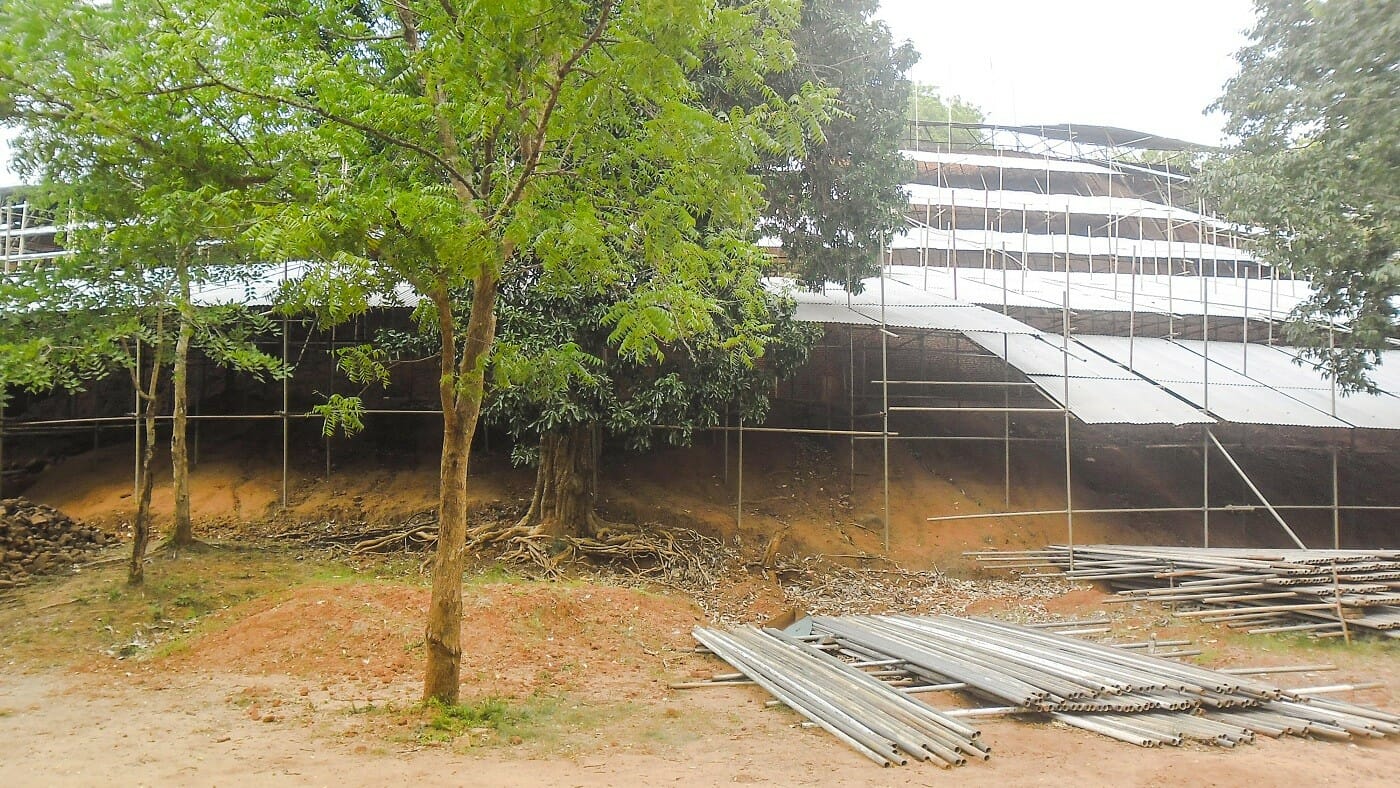
Demalamaha Seya is an ancient stupa built by the King Parakramabahu (1153-1186). It is located in the main archaeological site in the Polonnaruwa District of North Central Province, Sri Lanka. As it was described in the ancient chronicle Mahawansa, the stupa named “Demalamaha Seya” was with a height of approximately 1300 cubit (594.36 m). Presently this brick built stupa has a perimeter of 600 m and height of 25.65 m. The excavation and the conservation project of the Demalamaha Seya was commenced by the Central Cultural Fund in 2014. n.b. These photos were taken in October 2017 External Links Bringing back Read more...
Favorite
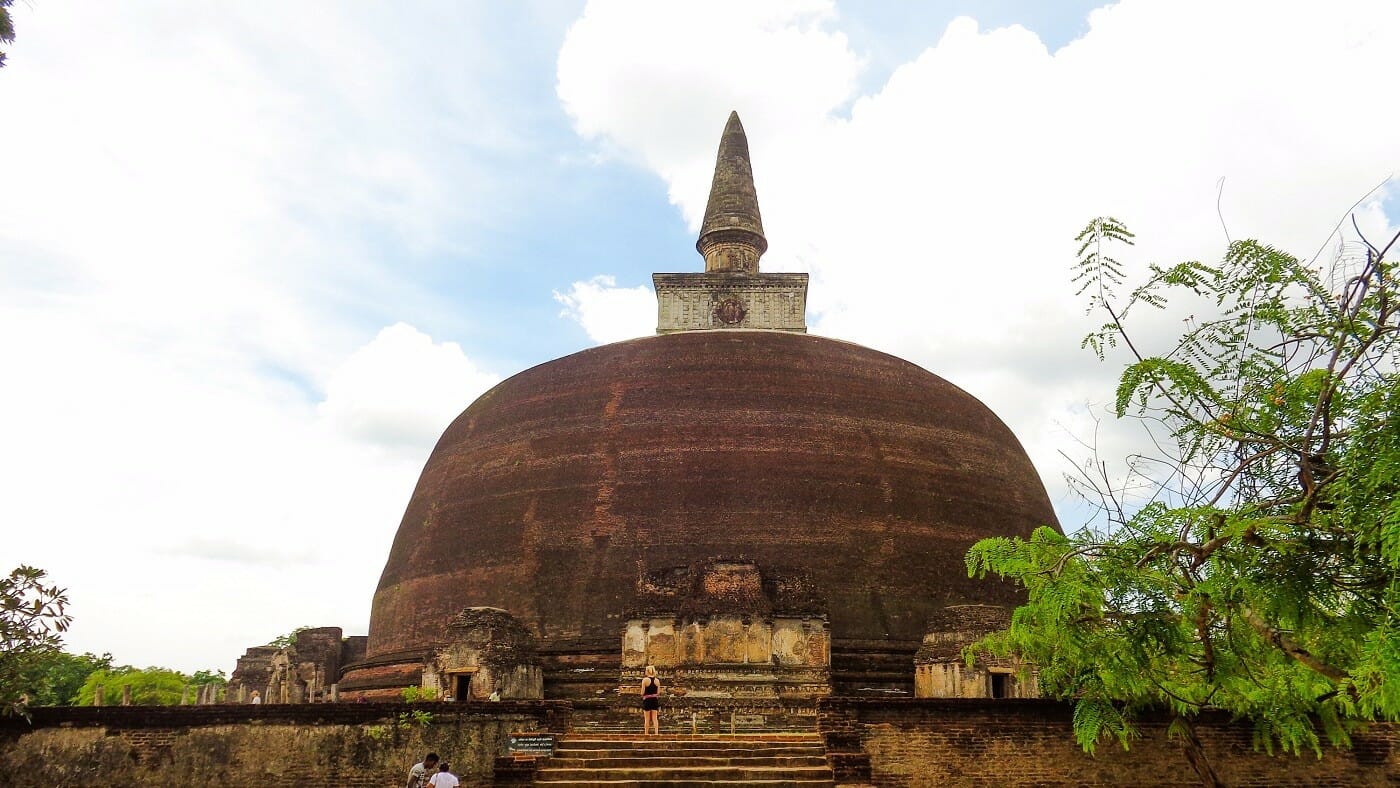
Rankoth Vehera is the largest stupa in the ancient city of Polonnaruwa and the 4th largest in Sri Lanka. It is about 33m in height and 170m in diameter. It was built by the King Nissanka Malla (1187-1196). This stupa has constructed with the same design as the Ruwanwelisaya in the Sacred City of Anuradhapura. According to a stone inscription found in the vicinity of the stupa, it was initially named as “Ruwanweli Stupa”. However, later it has come to be known as Rankoth Vehera. At each of the fours sides of the stupa, there are ruins of four gateways (“Vahalkada” in Sinhala) Read more...
Favorite
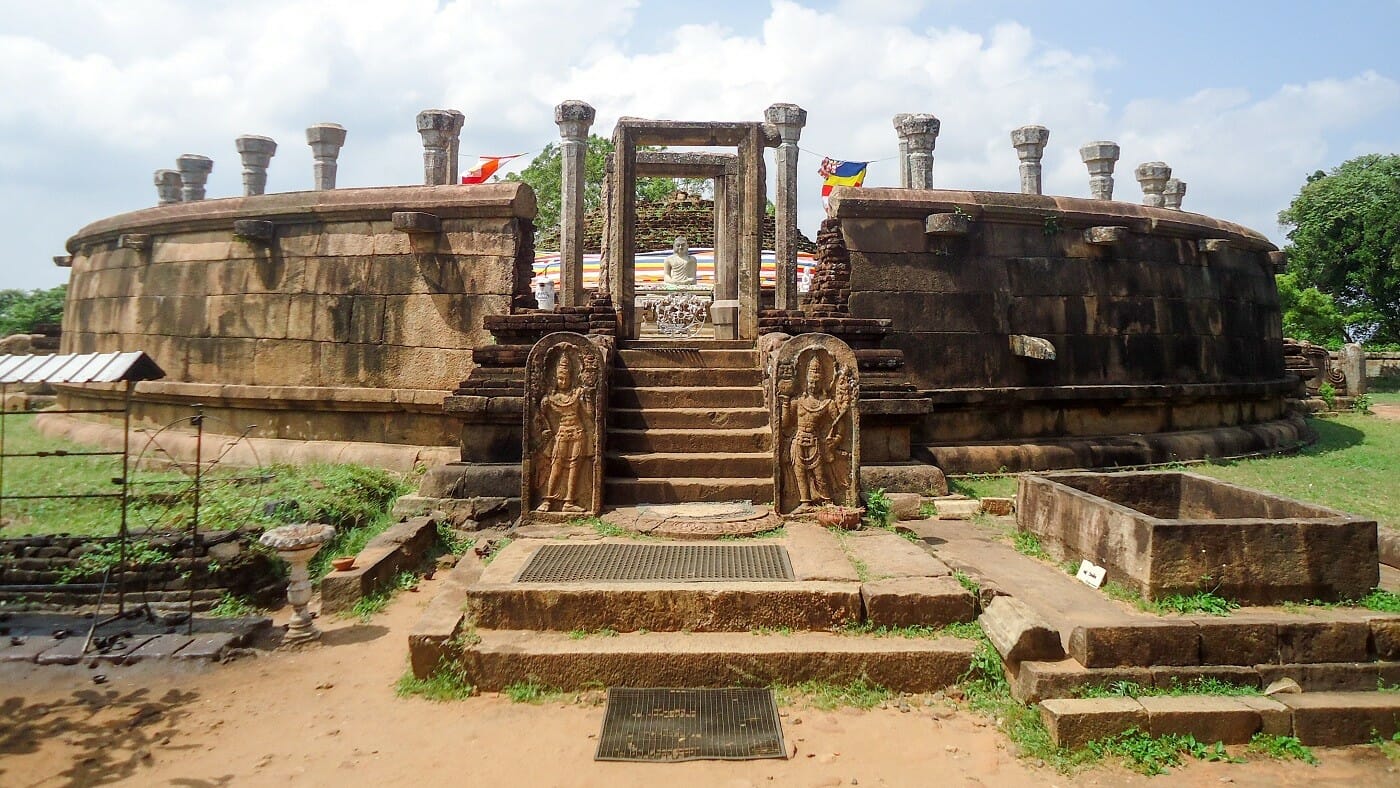
The Girihandu Seya stupa is located in Thiriyaya in Trincomalee District of Eastern Province, Sri Lanka. According to the legend, this is the stupa mentioned in the story of Thapassu and Bhalluka two traders. As such, it is considered to be the first Stupa built by enshrining the relic of Lord Buddha and probably it was built around 528 B.C. The stupa was originally a small in size and had been renovated in the 8th century A.D. The Vatadage encircling stupa was built during the renovation. External Links Thiriyaya Girihandu Seya Thiriyaya – Department of Archaeology Read more...
Favorite
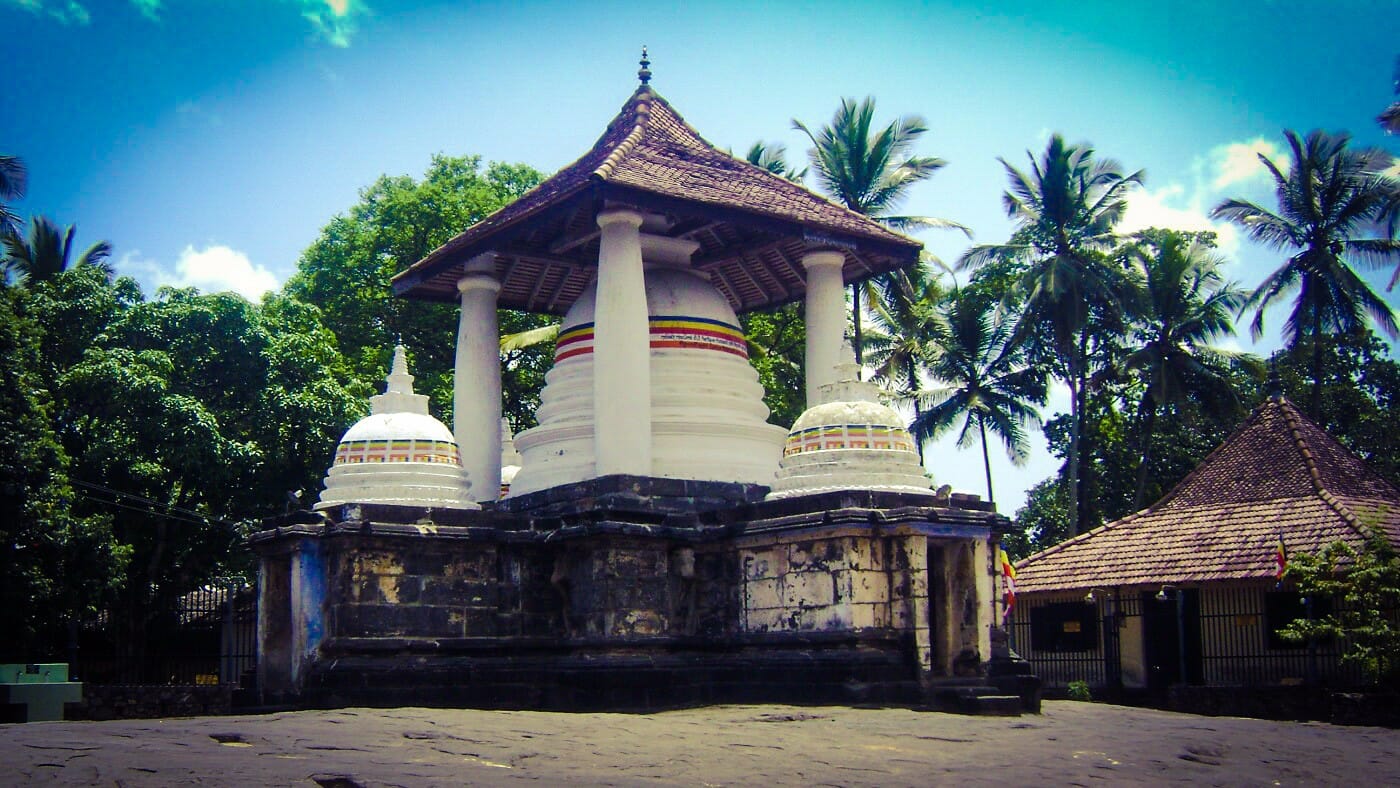
Gadaladeniya temple is an ancient Buddhist temple located in the Pilimathalawa area in Kandy District of Central Province, Sri Lanka. The temple was done by king Bhuvanekabahu IV ( reigned from 1341 to 1351) in 1344. According to the historical evidence, the temple was done by a South Indian architect named Ganesvarachari. Therefore, the temple has built according to the South Indian tradition. External Links Department of Archaeology Read more...
Favorite
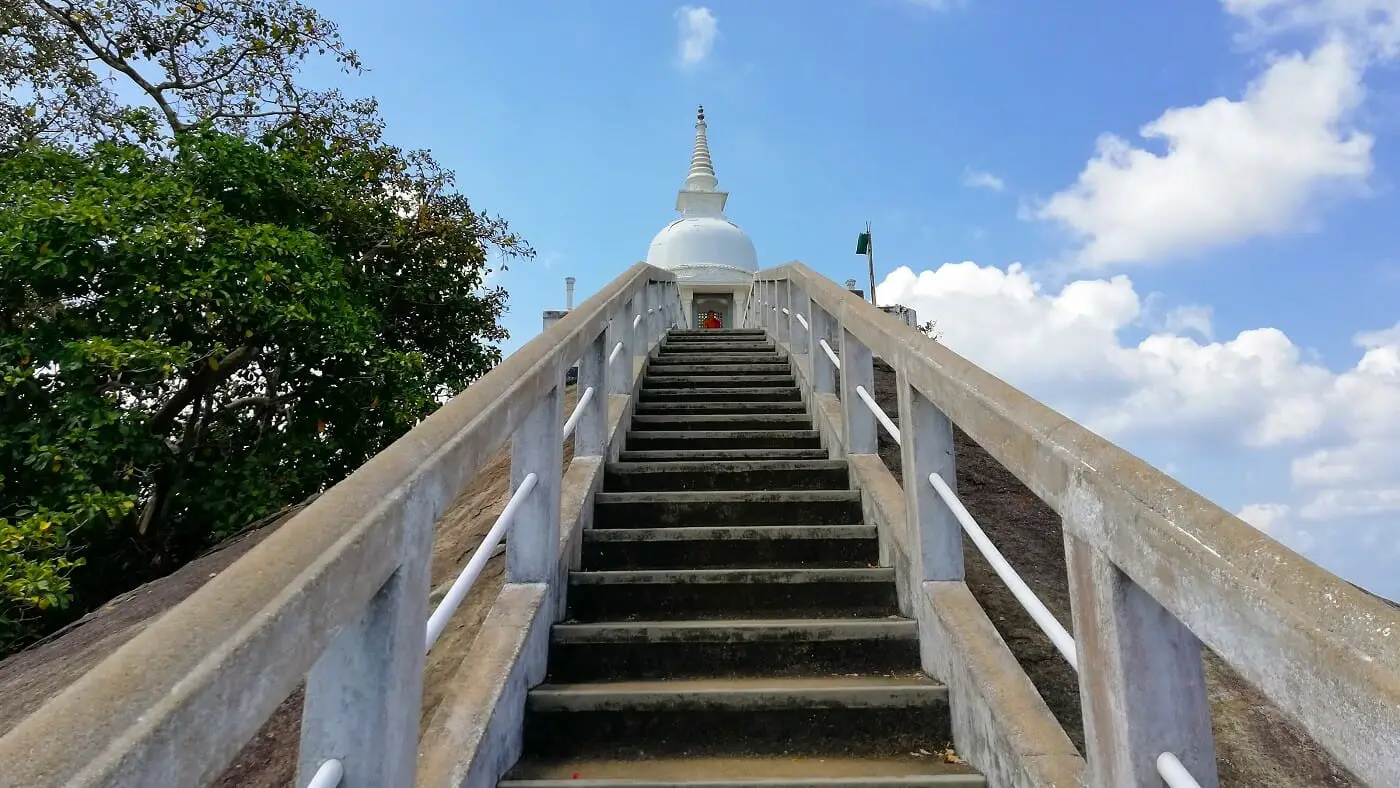
Enderagala Wana Senasuna is a Buddhist temple in a calm and quiet location in Dambulla in the Matale District of Sri Lanka. According to the inscription found in the caves, the history of this temple dates back to the 2nd – 1st century B.C. The temple is located beside the Ambepussa – Kurunegala – Trincomalee (A006) Highway, only 6km away from the Dambulla city. You can reach Enderagala Wana Senasuna withing15 minutes from Dambulla Cave Temple. The Stupa of the temple is located in a rock summit provide panoramic, 360-degree view of the area. On a clear day, you can Read more...
Favorite
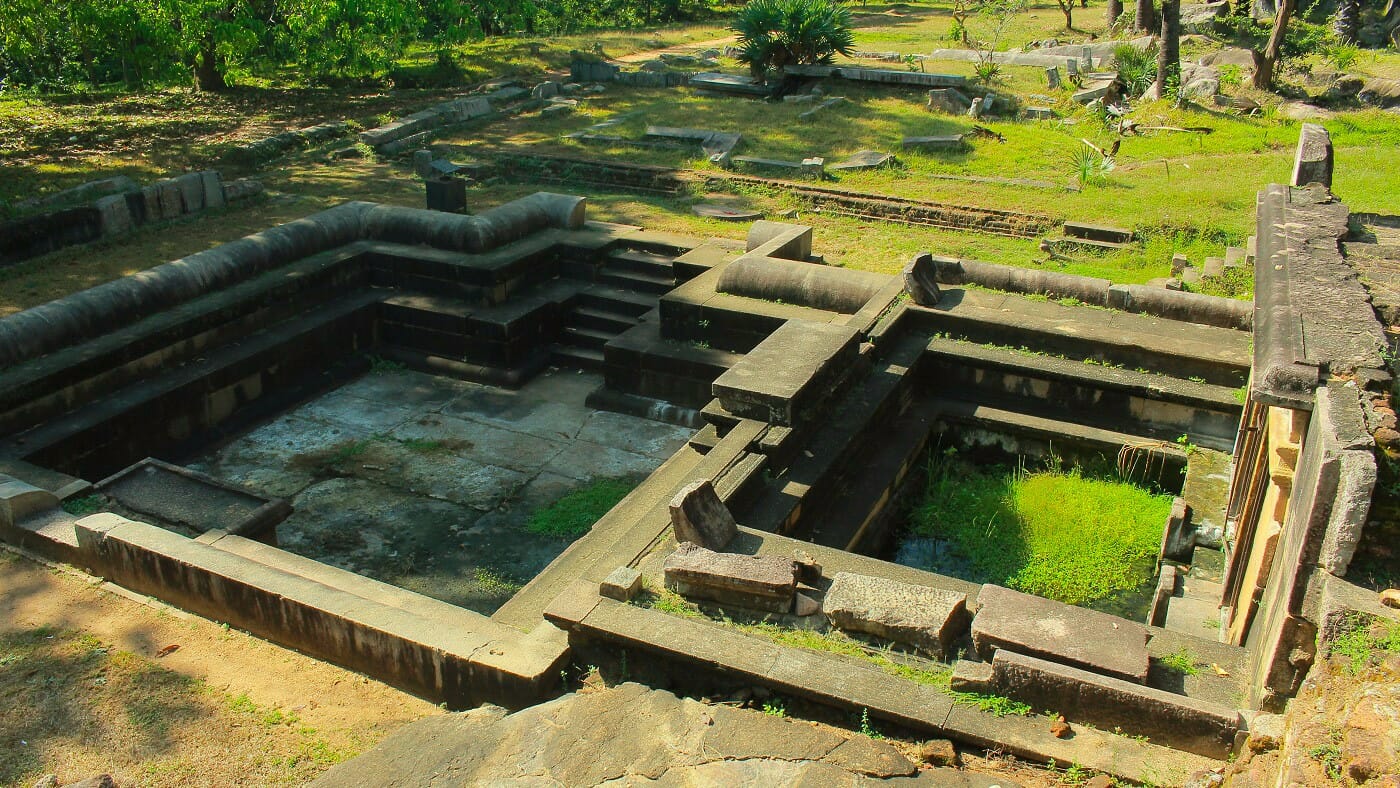
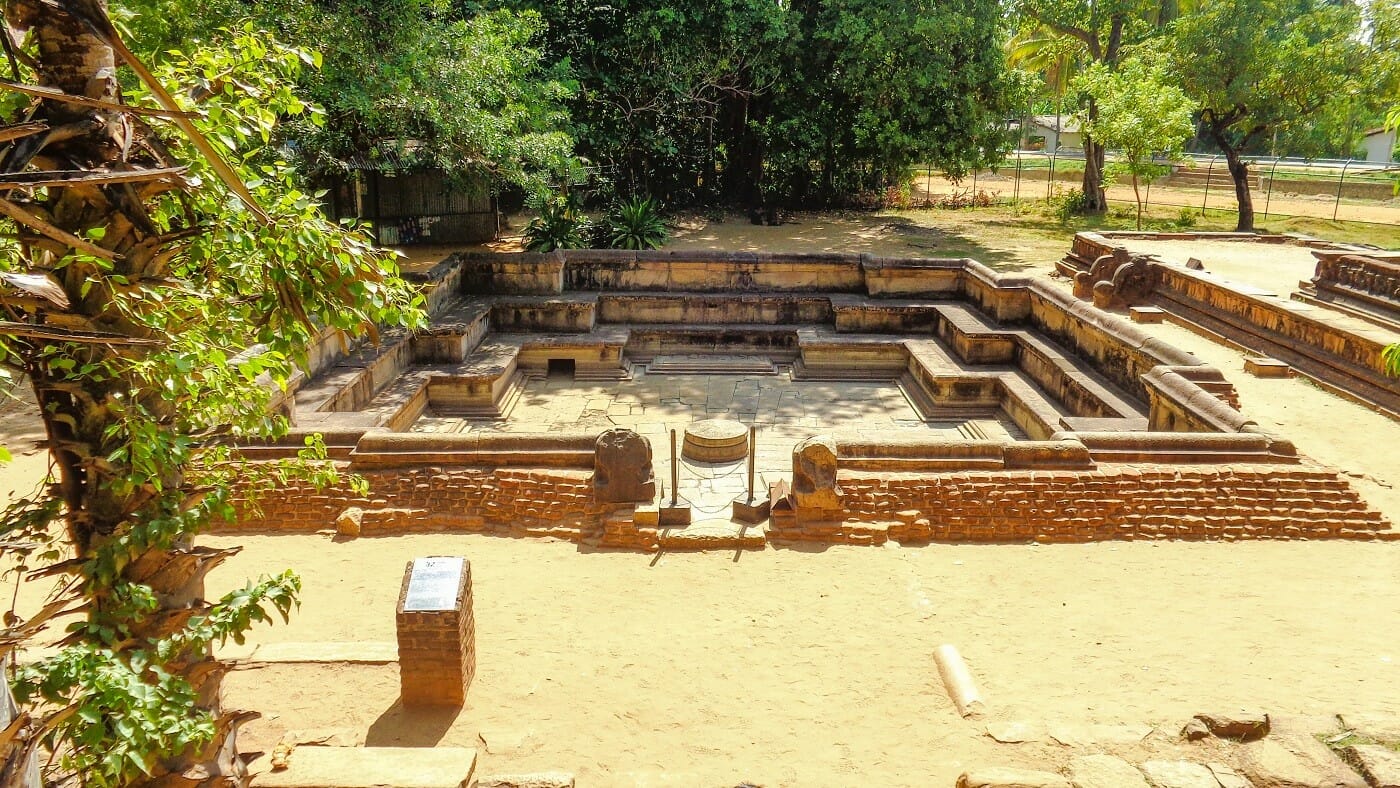
This pond or royal bath is presently known as “Kumara Pokuna” is believed to be the Pond named “Sila Pokkharani” mentioned Mahavamsa. The pond is located next to the Council Chamber of King Parakramabahu in Polonnaruwa District of North Central Province, Sri Lanka. According to Mahavamsa, the pond was built by King Parakramabahu the Great (1153 – 1186 A.D.). The pond is located such a way that it can get water from the Parakrama Samudraya tank and it has provided with outlets to drain off the used water. The water was supplied to the pond by the two dragon mouths located Read more...
Favorite
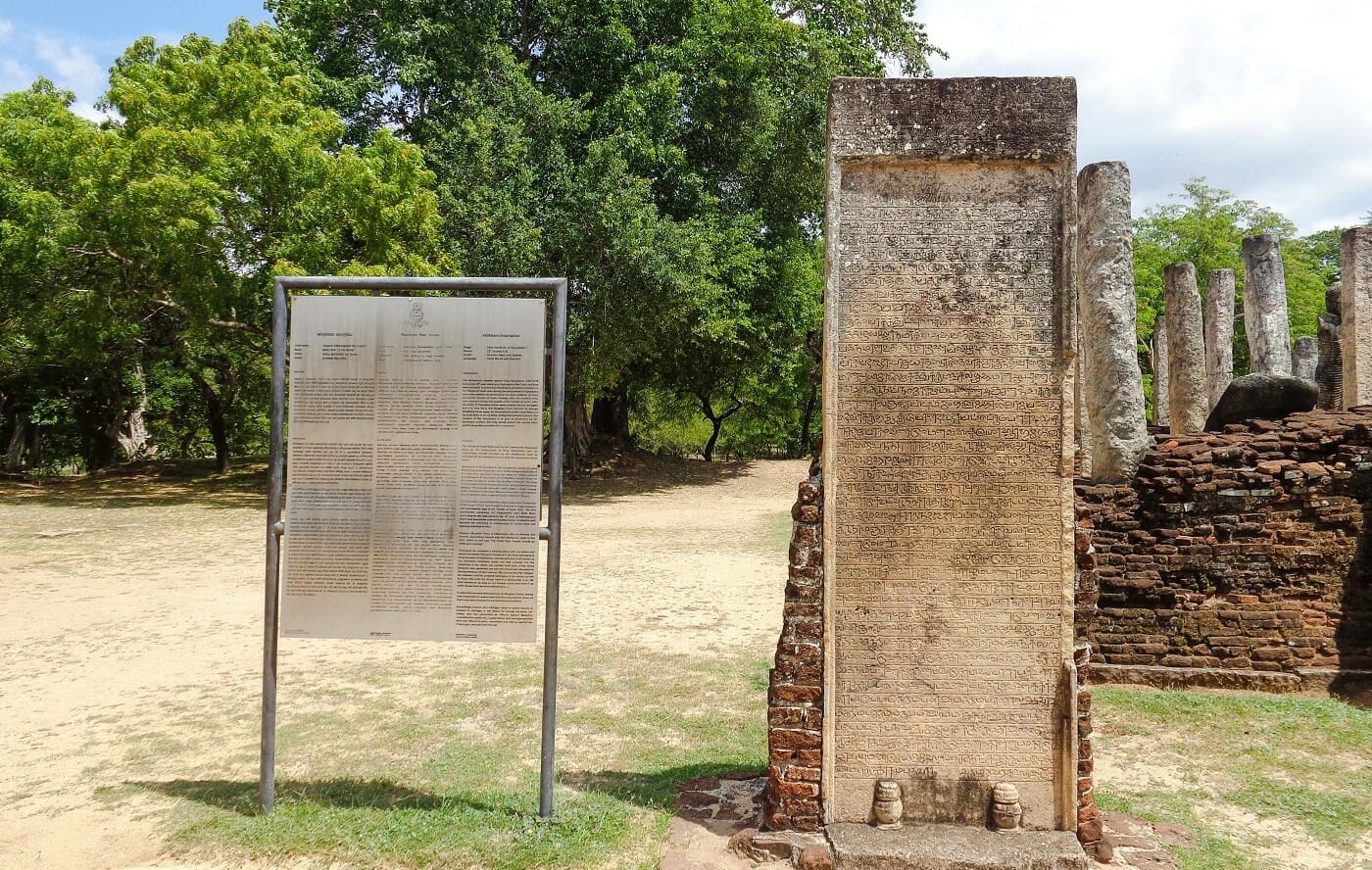
Velaikkara Inscription is an ancient inscription carved on a stone located in the Dalada Maluwa premises of main archaeological site in Polonnaruwa District of North Central Province, Sri Lanka. The Velaikkaras rebelled against King Vijayabahu (1055 – 1110 A.D.) in his 30th year refusing to fight against the Colas and they were punished. It seems that Velaikkaras provided protection to the Temple of Tooth even during the early period of Viajayabahu due to the mention of construction of some building by them around the Temple of Tooth. Perhaps after the rebellion, they were removed beings the guards of the Temple of Read more...
Favorite
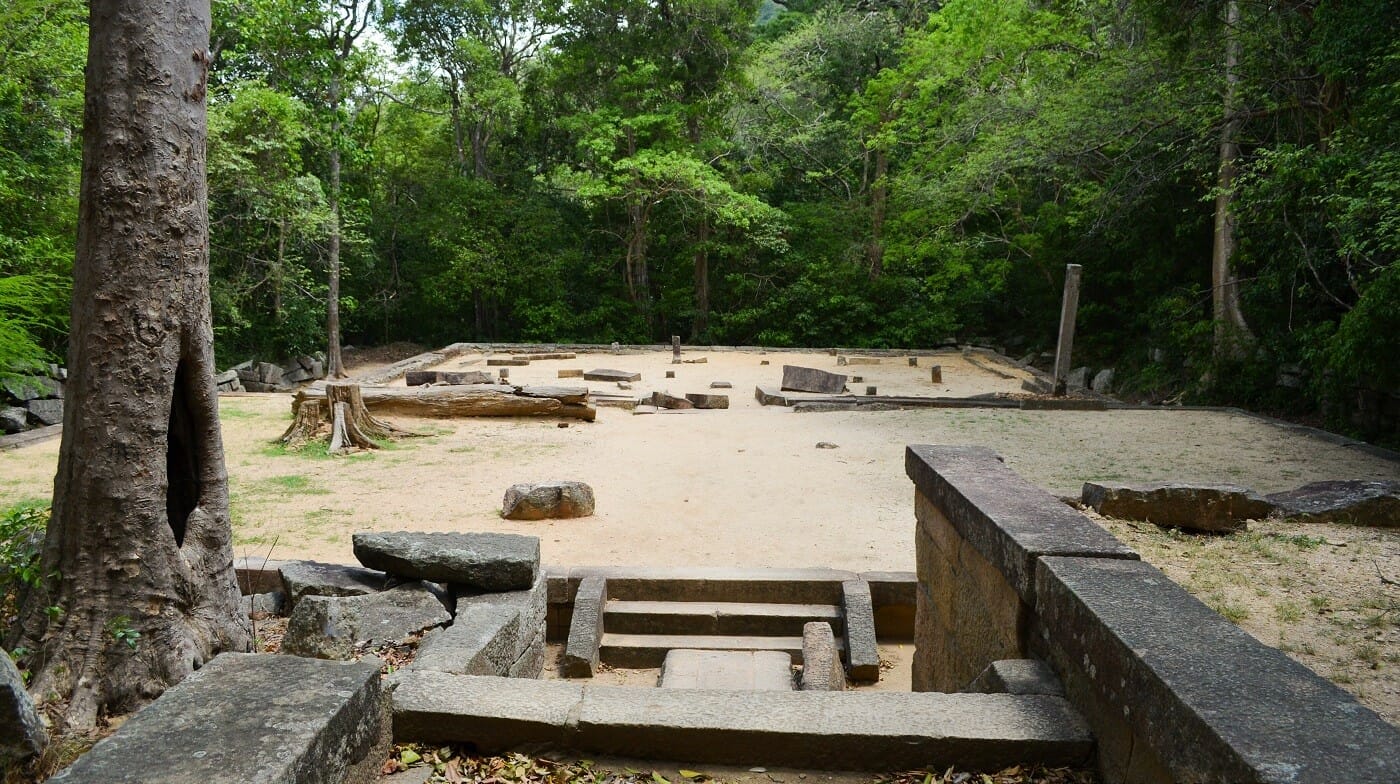
Ritigala is a mountain range located in Anuradhapura District of North Central Province, Sri Lanka. The mountain contains ruins of an ancient Buddhist monastery. The history of the monastery dates back to the 1st century BC. Ritigala Read more...
Favorite
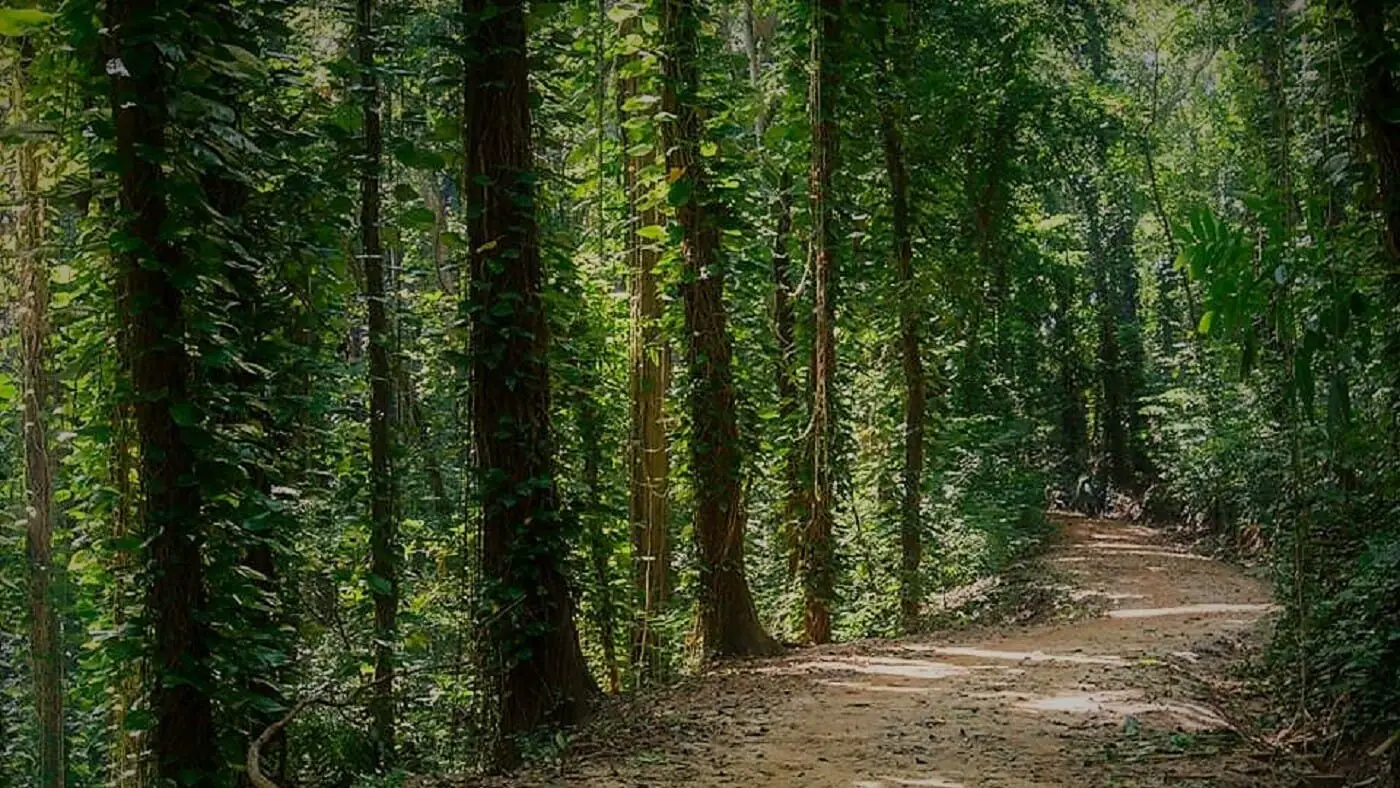
Udawattakele is a natural forest located in the middle of the Kandy City, behind Sri Dalanda Maligawa (Temple of the Sacred Tooth Relic). The forest is 257 acres in area and has a long history dating back to many centuries. There is a large verity of birds, animals, and butterflies belonging to various species in the forest. you can find a variety of trees including talipot trees, olive, cinnamon, rattan cane, bo-trees, kitul palms, jak, mara, betel nut, areca nut, Nuga, Pihimbiya, Niyaghala, Walla, Mee, Etamba, Sapu, Malaboda and Mahogany in this forest. The Udawattakele forest reserve which had been Read more...

